

Disclaimer: This article is for general informational purposes only and does not provide medical, legal, or safety advice. Always follow venue rules and use manufacturer instructions for grills, fuel, and equipment. For food safety guidance, refer to official U.S. sources.
The fastest way to make a tailgate feel effortless is to treat it like a repeatable system, not a one-off scramble.
This tailgate checklist is designed for U.S.-style game-day parking lots and campus setups, with practical steps for food, gear, and safety so hosts don’t overspend, forget essentials, or get tripped up by venue rules.
The author learned this the hard way: the first time they hosted, they forgot a lighter and a trash plan, and it cost them a stressful extra trip plus a messy pack-out that left everyone irritated.
The system below is what they use now built around timing, labeled bins, and a layout that keeps food safe and people comfortable.
To keep this genuinely useful, the guide goes beyond “bring a cooler” and “pack snacks.” It walks through setup planning, menu formulas that travel well, grilling choices, hydration logistics, safety essentials (including food temperatures and fire control), weather-proofing, and cleanup discipline.
It’s written to be a resource a host can follow again and again, whether it’s a pro game, college Saturday, or a long baseball afternoon.
Tailgate checklist (printable, time-based, and crowd-proof)
This is the grab-and-go section most people bookmark. It’s intentionally time-based, because tailgates fail more often from poor sequencing than from missing gear. If the “cold stuff” sits in the sun while someone fiddles with tables and décor, it doesn’t matter how fancy the menu is.
Quick scan: the “don’t leave home without it” core list
A smart host packs for three outcomes: (1) food and drinks are served on time, (2) everyone stays comfortable, and (3) the space gets cleaned fast.
Core items
- Parking pass / digital tickets / IDs
- Phone + charging cable + car charger
- Lighter or matches (kept in a dry bag)
- Trash bags (at least 2× what seems necessary)
- Paper towels, wipes, and a small roll of tape
- Basic utensil kit and serving tools
- Ice (or plan for a stop close to the lot)
- A small first-aid pouch
- One “spares” bag: extra napkins, zip ties, a spare lighter, an extra phone cable
Items you might forget for a tailgate
- Bottle opener / corkscrew
- Scissors (for packaging, tape, zip ties)
- A spare trash bag to line the car trunk after pack-up
- A sharpie (labeling coolers, bins, leftovers)
The 3-stage timeline
The author’s most reliable hosting improvement was shifting from “pack the night before” to “pack in three passes.” The early pass covers inventory and plan; the second pass loads food and gear; the last pass is a sanity-check.
T–24 hours: the game day party planning list
At this stage, the best move is to set the plan and remove surprises:
- Confirm parking, entry times, and any lot restrictions.
- Inventory gear (chairs, table, canopy, cooking setup).
- Charge batteries, power banks, and any speakers.
- Make a short menu decision so shopping stays focused.
- Pre-chop anything that can be safely prepped (vegetables, toppings) and seal it well.
- If serving warm food, decide whether it will be grilled on-site or transported hot.
T–2 hours: outdoor party food prep list
This pass is about food safety and efficiency:
- Pack cold items last and keep them together.
- Label bins (food, cooking, cleanup, comfort, games).
- Load the car in “first needed / last needed” order: canopy/tables first, coolers last so they’re easily reachable.
- Group small items (tape, lighter, napkins, utensils) into one “quick access” pouch.
T–15 minutes: last-minute tailgate run checklist
Right before leaving, do a final sweep using a “four essentials” mindset:
- Ice
- Fuel
- Utensils
- Wipes
This is also the right moment to put a printed list or a phone note on top of the cooler lid, so nothing gets missed when loading.
Planning your setup for U.S. stadium lots (stadiums, campuses, and parks)
The easiest way to avoid chaos is to think like an event planner: define your footprint, create zones, and keep walkways clear. Parking lots are shared spaces, and the best hosts build comfort without blocking lanes or creating hazards.
Choosing your footprint: stadium parking lot setup
A reliable footprint starts with orientation:
- Place the “front” of the setup facing your group’s approach path.
- Keep cooking downwind from seating where possible.
- Leave a clear lane behind the car for neighbors to pass.
- If the lot is crowded, reduce sprawl and use vertical organization (stacked bins, hanging trash bags).
The author’s rule: if someone can’t walk through without stepping over cords, bags, or coolers, the setup is too cluttered.
Layout that actually works: quick setup tailgate layout
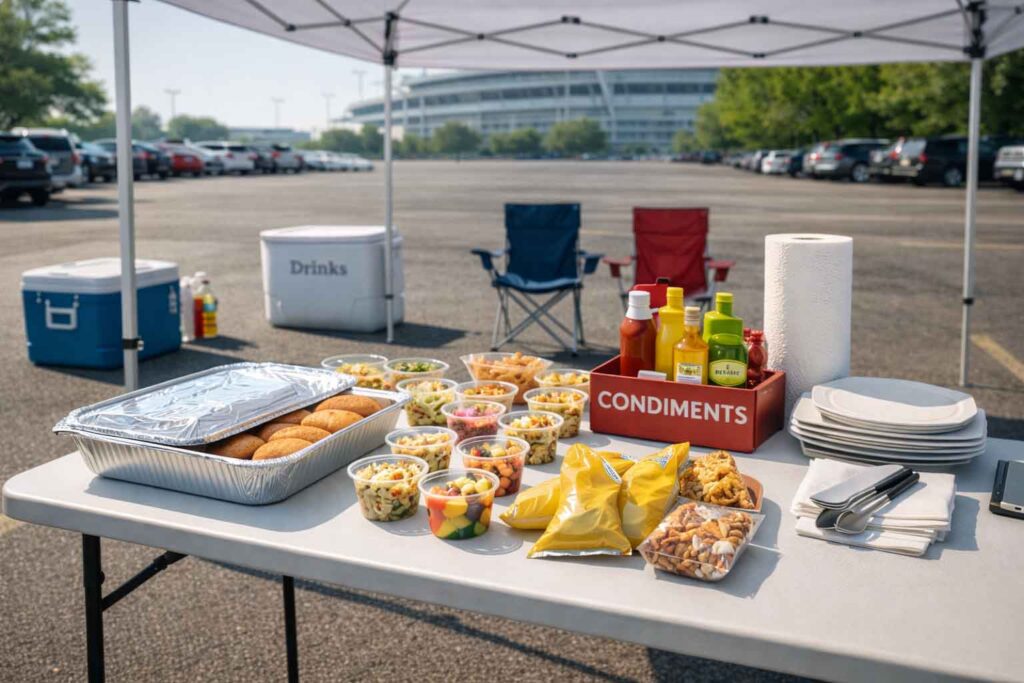
A simple layout beats an ambitious one. The most effective approach is a four-zone system: food, drinks, cleanup, and games.
Surfaces and zones: folding table setup ideas
A folding table is more than a surface; it’s a control center:
- Food zone: prep board, condiments, serving trays
- Drink zone: cups, bottle opener, labels, ice scoop
- Trash/recycling zone: lined bags, paper towels nearby
- Game zone: toss games away from the grill and foot traffic
This prevents the classic bottleneck where everyone gathers around one table and blocks access to everything.
Shade & shelter: pop-up canopy setup
A canopy is comfort and food safety in one. It creates shade for people and reduces heat exposure for food and drinks. A Pop-up canopy tent is the most common choice because it sets up quickly and packs down small. Weights matter more than people think; a canopy that shifts in wind can create both safety and etiquette problems.
Comfort for the group: seating plan for groups
Seating is the difference between “people stop by” and “people stay.” Folding camp chairs are the simplest solution because they’re portable, stable, and easy to arrange in a semi-circle that supports conversation. The author recommends setting chairs before unpacking the food once seating is established, the rest of the setup becomes more organized.
Food that travels well and feeds a crowd (with a menu formula)
Tailgate food succeeds when it’s designed for transport, outdoor temperatures, and people eating with their hands. This section uses a “menu formula” so hosts can scale up or down without overthinking it.
Build a simple menu framework: best foods to pack for a tailgate
A host-friendly formula:
- 1 hot item (grilled or transported hot)
- 1 cold side
- 2 snacks
- 1 dessert
- 2 drink options (one clearly non-alcoholic)
This framework keeps variety high without creating a prep nightmare. It also protects the host from spending the whole tailgate cooking instead of enjoying it.
Make-ahead wins: make-ahead snacks for crowds
Make-ahead food is the secret to a calm setup. If snacks are ready before arrival, the group eats while the grill comes online.
Hands-only favorites: crowd-friendly finger foods
The best finger foods share three traits: low mess, sturdy texture, and easy portioning. Think skewers, mini wraps, baked bites, and snacks that don’t require plates. The author’s hosting note: if a snack needs a knife to serve, it’s not a tailgate snack.
Sandwich strategy: easy no-fuss sandwiches for parties
Sandwiches win when they’re engineered to stay intact:
- Pack sauces separately.
- Use sturdier bread (rolls, buns) instead of soft sliced bread.
- Keep wet ingredients (tomatoes, pickles) in separate containers until serving.
This prevents the “soggy by kickoff” problem and keeps sandwiches presentable.
Hot foods that hold: tailgate food that stays warm
Warm food is morale. A host doesn’t need complicated equipment just smart containers and portion control.
Starters people hover around: warm appetizers for outdoor parties
Warm appetizers work best when served in small batches. Aluminum foil pans are helpful for holding heat and making cleanup easier. Insulation tricks (wrapping pans in towels inside a tote) can extend warmth long enough for serving. The author’s habit: keep the “next pan” covered so only one pan is exposed at a time.
Prevent texture problems: tailgate snacks that don’t get soggy
Soggy snacks are usually a moisture-control issue:
- Separate wet and dry items.
- Vent fried foods slightly so steam escapes.
- Keep chips sealed until the last possible moment.
A simple tactic is to use paper towels under fried items to absorb condensation.
Cold items that survive transit: cold sides that travel well
Cold sides are the easiest way to add freshness without grill time. The best options are stable and not overly creamy: slaws with vinegar-based dressing, pasta salads with sturdy ingredients, fruit cups, and pickles. A host can pre-portion sides into cups for easier serving and faster cleanup.
Transporting safely (without ruining your food): how to transport hot food safely
Transport hot food hot and cold food cold. That’s the governing principle. A host should:
- Preheat insulated carriers if possible.
- Seal containers tightly to prevent heat loss.
- Minimize time between cooking and serving.
- Keep hot food physically separated from cold food in the car.
The author’s practical note: “Hot food in the back seat, cold food in the cooler” is a simple mental model that prevents mistakes.
Pack, store, and bring leftovers home: food storage and leftovers plan
Leftovers are inevitable, and good containment prevents spills and waste. Ziploc storage bags are excellent for condiments, sliced produce, and quick snack packing. A Rubbermaid storage tote can function as a “clean bin” that holds leftovers, utensils, and sealed containers without tipping.
To protect the car, spill-proof drink containers are worth it, especially when kids are involved or the drive back includes sudden stops.
Grilling and cooking gear (portable, legal, and efficient)
Cooking on-site can be simple if gear is chosen intentionally. The goal is reliable heat, safe placement, and a tool set that prevents constant trips to the car.
Your cooking choice: portable grill packing list
Portable cooking depends on the tailgate’s goals:
- A compact grill for quick burgers and hot dogs
- A flat-top for breakfast-style cooking and batch heating
- A pellet option for slow-cooked flavor (if the lot rules and timing allow it)
Example options people often recognize include a Weber portable grill, a Blackstone griddle, and a Traeger portable pellet grill each works, but the best choice is the one the host can operate confidently in a parking-lot environment.
Fuel planning and tradeoffs: propane vs charcoal for parking lot grilling
Fuel choice is a tradeoff between speed, control, and cleanup. Propane typically starts faster and offers easier temperature control; charcoal creates a familiar cookout flavor but requires more setup and ash management.
Propane readiness: propane tank and fuel prep
A host should treat fuel as safety gear, not just “grill stuff.” A Propane cylinder (20 lb) is common, but readiness includes:
- A quick leak check
- A spare regulator if possible
- An extra lighter
- Awareness of where the tank sits (stable, upright, away from high foot traffic)
Charcoal readiness
Charcoal can work well when the host plans for lighting and airflow:
- Bring Charcoal briquettes in a sealed container
- Use a Chimney starter for consistent ignition (and fewer lighting failures)
- Plan for ash disposal properly and safely
The tool roll that prevents chaos: tailgate grilling tools list
A “tool roll” keeps the grill area efficient:
- Instant-read meat thermometer for safe doneness checks
- Cast iron skillet for sautéing or keeping items warm
- Aluminum foil pans for holding cooked batches and reducing cleanup
The author’s hosting note: most tailgate cooking delays come from missing a simple tool (tongs, thermometer, or a tray). A dedicated tool roll solves that.
Drinks, ice math, and hydration (including non-alcoholic options)
Drinks are the highest-volume part of most tailgates, and they’re where organization matters most. A well-run drink station reduces traffic around the food and keeps kids and adults from constantly digging through coolers.
Set up like a host: drink station setup
A “host-grade” station includes:
- Cups, napkins, and labels
- Bottle opener
- A small “return zone” for empties so the table doesn’t clutter
- A clear spot for water that’s easy to reach
Simple execution: simple tailgate drink station
A practical system is “two coolers, two purposes”:
- One cooler for drinks (opened frequently)
- One cooler for food (opened less often)
This prevents temperature swings that risk food safety and melted-ice chaos.
Cooler decisions and packing method (teach the “why”)
This is where many hosts either overbuy or underpack. The best approach is to match cooler size to headcount and duration.
A host deciding what size cooler for a tailgate should factor in:
- Number of people
- Hours in the lot
- Whether food shares space with drinks
To teach how to pack a cooler like a pro, focus on layering:
- Pre-chill items
- Put ice at the bottom and top
- Place the least-used items at the bottom
- Keep frequently grabbed drinks near the top edge
Good cooler organization tips also include labeling which cooler is “food only” so guests don’t unknowingly warm it up.
Some widely recognized examples include a YETI Tundra cooler for long ice retention, a Coleman cooler as a budget-friendly workhorse, and an Igloo cooler for everyday group outings any of them can work if packing is done correctly.
Ice planning people actually ask about: how much ice do you need for a cooler
A usable rule of thumb: plan for roughly a 2:1 ice-to-contents ratio if the cooler is opened frequently, and closer to 1:1 if it stays closed most of the time. Variables that change the math:
- Ambient temperature
- Pre-chilled vs room-temperature drinks
- Duration of the event
- Cooler insulation quality
If the tailgate is long and hot, block ice (or frozen water bottles) can extend cold time significantly.
Keeping it cold all day: how to keep drinks cold at a tailgate
A host can dramatically improve cold retention by:
- Pre-chilling drinks overnight
- Using a mix of block and cube ice
- Keeping the cooler in shade
- Opening the lid less often by sorting drinks in advance
- Separating food from drinks as described earlier
Hydration and inclusivity: hydration plan for long events
A thoughtful host builds hydration into the plan:
- Put water in the easiest-to-reach location
- Offer electrolyte options in hot weather
- Encourage shade breaks
- Keep a simple cue: “water first, then anything else”
Options beyond alcohol: non-alcoholic game day drinks
Non-alcoholic options should feel intentional, not like an afterthought. Sparkling water, flavored seltzers, lemonade, iced tea, and a chilled sports drink are easy wins. A Stanley insulated tumbler can be a helpful personal cup for keeping drinks cold and reducing cup waste.
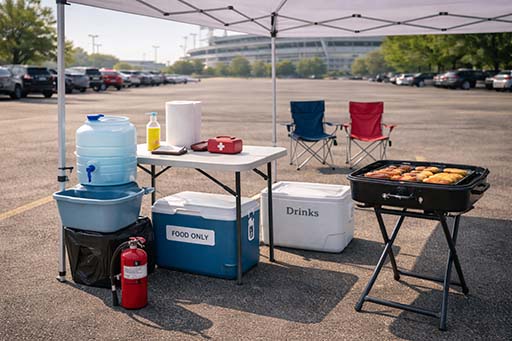
Safety essentials (food safety, fire safety, and people safety)
A tailgate feels “family-friendly” when safety is visible and proactive. That means food temperatures are respected, fire risks are controlled, and basic first aid is accessible.
Food safety you can apply in a parking lot: food temperature safety checklist
Food safety is about time and temperature. The phrase people often search is safe temps for cooked meat outdoors, and the most reliable advice is to follow official guidance rather than guessing. The USDA Food Safety and Inspection Service (FSIS) is a recognized authority for safe food handling, including storage and cooking temperatures.
Practical checklist for a host:
- Keep cold foods cold (in a dedicated cooler)
- Keep hot foods hot (covered, insulated, served in batches)
- Don’t leave perishable foods out for extended periods
- Use a thermometer rather than relying on “looks done”
Fire and heat risk control: safe grilling and fire prevention
Grilling safety is a mix of placement and readiness:
- Keep grills away from cars, canopies, and foot traffic
- Avoid placing fuel or aerosol items near heat
- Designate a “no-kids zone” around the grill
A Fire extinguisher (ABC) should be reachable, not buried in the trunk. The author’s habit is to place it near the grill but not so close that someone has to reach through heat to grab it.
Basic medical readiness: first-aid items for outdoor events
Tailgates create small injuries burns, cuts, headaches, and scrapes especially when kids are present. A First-aid kit should include:
- Bandages, antiseptic wipes
- Burn gel or burn dressings
- Pain reliever (as appropriate for the group)
- Allergy support if needed
- Tweezers and small scissors
Clean hands, clean food: handwashing station setup
A simple station can be assembled with:
- Water jug
- Soap
- Paper towels
- A catch basin or a designated drain method
This reduces illness risk and keeps food handling more hygienic than relying solely on wipes.
Quick decision guide: hand sanitizer vs handwashing station
Many hosts wonder whether sanitizer is enough. The most practical guidance:
- Sanitizer is helpful when hands are not visibly dirty
- Handwashing is better when handling food, after using the restroom, or after touching shared surfaces
A host can keep Hand sanitizer available for quick use, but handwashing should be prioritized when food prep is happening.
Weather-proofing and comfort (wind, rain, heat, cold)
Weather changes fast, and comfort issues can ruin an otherwise perfect setup. A good host builds a flexible kit and makes fast adjustments without drama.
Build a “go-anywhere” kit: weather-ready party gear
A “weather kit” prevents last-minute store runs:
- Ponchos or light rain jackets
- A tarp or ground cover
- Extra layers
- Spare socks
- A small towel set for spills and wet seats
If it’s cold: cold-weather game day gear
Cold weather requires both warmth and practicality:
- Hand warmers
- Insulated seating (blanket on chairs)
- Thermos soup or hot cocoa for kids
- Gloves that still allow easy cooking tasks
If it’s hot: hot-weather sun protection items
Heat planning is safety planning:
- Sunscreen and hats
- Shade-first setup choices
- Cold water and electrolyte drinks
- Cooling towels if the sun is intense
When bugs show up: bug protection for outdoor events
Bugs become a factor in late summer and early fall:
- Repellent
- Seal food containers
- Keep sweet drinks covered
- Use permitted deterrents (some venues restrict open flames like citronella)
Wind and canopies: tailgate canopy tips for wind
Wind control is structural:
- Use proper canopy weights
- Lower canopy height if gusts increase
- Position the canopy as a windbreak rather than a sail
- Secure loose décor and table covers
Rain plan: what to do if it rains during a tailgate
A calm rain plan includes:
- Move food into sealed bins or under canopy immediately
- Elevate electronics and batteries
- Keep towels ready for surfaces
- Maintain a safe exit route so cars can move if needed
Entertainment, vibe, and family-friendly details
Food brings people in, but activities keep the group engaged and make the experience memorable especially when kids are involved.
What people actually do between bites: parking lot games list
Games should match the space and crowd:
- Toss games placed away from the grill
- Trivia cards
- Mini football toss (soft ball for safety)
Keep it inclusive: tailgate games everyone can play
Inclusive games are simple, low-impact, and not dependent on athletic ability. The best ones allow kids, teens, and adults to participate without embarrassment.
For families: kid-friendly game day activities
Family hosting works best when kids have a dedicated activity kit:
- Coloring sheets
- Sticker packs
- Small foam balls
- Simple snack packs that reduce constant requests at the main table
A little theme goes a long way: team-themed party decor
Décor does not have to be expensive. Flags, a table cover, and coordinated napkins create a game-day vibe without cluttering the setup. The author’s rule: if décor makes cleanup harder, it’s not worth bringing.
Sound without becoming “that group”: speaker and music setup
Music is part of the energy, but volume etiquette matters in shared lots. A Bluetooth speaker is usually enough; the key is to keep sound directed toward the group and low enough for neighbors to enjoy their own space.
Rules, etiquette, and cleanup
This is the section that separates considerate tailgates from the ones that cause problems. Venue rules vary, but the principles stay consistent: don’t block lanes, don’t create hazards, and leave the area cleaner than you found it.
Know the boundaries: local parking lot rules and etiquette
A host should assume three categories of rules:
- Safety rules (grill distance, no open flames near vehicles)
- Space rules (don’t exceed your assigned spots)
- Disposal rules (trash and recycling expectations)
Being considerate here prevents conflicts and protects future tailgate access.
Avoid gate issues: stadium bag policy planning
Bag policies often differ by venue and can be stricter than people expect. The safest approach is to check the venue site before leaving and keep entry items minimal and compliant. This prevents the frustration of walking back to the car right before the event.
Cleanup systems that work: cleanup and trash management plan
Cleanup should be a system, not a last-minute panic:
- Line a bin or tote with a trash bag early
- Keep paper towels within reach
- Designate one person as the “closer” who does a final sweep
Recycling matters too: tailgate trash and recycling setup
A two-bag method works well:
- One bag for trash
- One bag for recyclables
Keep liquids separate to avoid messy leakage.
Serveware choice with less regret: disposable vs reusable serveware
Both options work depending on the event:
- Disposable: faster cleanup, less worry, more waste
- Reusable: nicer feel, less waste, requires washing plan
A good host chooses based on logistics, not ideals.
Low-waste options: eco-friendly party supplies
If waste reduction is a goal, the easiest improvements are:
- Compostable plates and napkins
- Reusable cutlery
- Refillable condiment bottles
These reduce trash volume without complicating the tailgate.
Pack-out discipline: post-game pack-up checklist
Pack-up succeeds when it’s staged:
- Seal leftovers and label them
- Collapse chairs and canopy
- Do a final ground sweep for wrappers, zip ties, and bottle caps
- Verify no fuel or sharp tools are left behind
Power for modern tailgates: generator or power bank planning
Power is helpful for charging phones, running small devices, or supporting a longer setup. Hosts should prioritize safety, noise awareness, and venue rules. For many groups, a power bank is quieter and simpler than a generator.
To tighten the hosting system further, the author uses a small “serve kit” with condiment caddy essentials (mustard, ketchup, hot sauce, salt/pepper, napkins) and a separate serving utensils packing list (tongs, serving spoon, knife, cutting board). Keeping these kits separate prevents the most common delay: searching for one missing utensil while guests wait.
Audience-specific mini checklists (NFL, college, baseball, and tournaments)
Different events change timing, crowd patterns, and even what people expect to eat.
Pro football Sundays: what to bring to a football tailgate
For an NFL tailgate, arrivals can cluster, and space can be tight. Plan for faster setup, compact gear, and food that serves quickly.
College Saturdays and campus lots
College lots often have longer tailgates and more walking. NCAA environments can mean early starts and campus rules. Regional conference culture also shapes expectations; SEC tailgates can be more elaborate, while Big Ten Conference lots can require stronger cold-weather planning in late season.
Baseball tailgates and long afternoons
An MLB tailgate often stretches longer and benefits from more shade, more water, and lighter snacks alongside a few hearty items.
Tournament tailgates and watch parties
For NCAA March Madness, the tailgate might blend with watch-party behavior more grazing food, less grilling, and more comfort planning.
My “host workflow”
This section is intentionally experience-driven without turning into a diary. It’s about the repeatable system that reduces stress and makes the host look organized even when the lot is busy.
The one system that reduced my stress the most (bins + labels + zones)
The author frames everything as pregame parking lot party essentials organized into five labeled bins:
- Cook
- Serve
- Clean
- Comfort
- Games
Each bin has a clear role. “Cook” includes tools and fuel; “Serve” includes cups and utensils; “Clean” includes trash bags and wipes; “Comfort” includes weather items; “Games” includes activities. This is why the author rarely forgets small items and never has to dump the trunk out to find tongs.
My two personal non-negotiables (safety + cleanup)
The author’s two non-negotiables are simple:
- Food safety stays visible: cold foods remain in a dedicated cooler, and hot foods are served in batches.
- Cleanup begins at setup: trash and recycling are established early, not after the crowd arrives.
That combination prevents the two outcomes hosts regret most: unsafe food handling and a stressful, messy pack-out.
What I’d do differently next time (honest post-mortem)
Even with a system, every host learns something:
- Mistake: Setting décor and games before shade and seating.
Fix: Put canopy and chairs first, then tables, then food. - Mistake: Letting guests open the food cooler for drinks.
Fix: Two-cooler system and clear labels. - Mistake: No dedicated “small items pouch.”
Fix: One pouch that always holds tape, scissors, sharpie, lighter.
FAQs
1) What are the best foods to pack for a tailgate if I only have 30 minutes to prep?
A fast tailgate menu should prioritize no-cook snacks and one hot item that’s easy to heat.
- Choose deli sandwiches or wraps with sauces packed separately.
- Add a cold side like fruit cups or a simple slaw.
- Include one warm item that can be heated quickly on-site or transported hot in a covered pan.
2) How much ice do you need for a cooler for a 4-hour tailgate?
For about four hours, a practical baseline is a 1:1 to 2:1 ice-to-contents ratio depending on how often the lid opens.
- Pre-chill drinks and food before packing.
- Use block ice or frozen water bottles for slower melting.
- Keep the cooler shaded whenever possible.
3) What size cooler for a tailgate works for 4 people vs. 12 people?
Cooler size depends on whether it carries drinks only or drinks plus food.
- For 4 people, one medium cooler can work if drinks are pre-chilled and space is managed.
- For 12 people, two coolers are usually better: one for drinks, one for food.
- A separate “food-only” cooler improves temperature control.
4) How to pack a cooler like a pro so food stays safe and drinks stay cold?
A well-packed cooler uses layers and minimizes lid openings.
- Put ice at the bottom and top, with pre-chilled items in the middle.
- Keep frequently grabbed drinks near the top edge.
- Separate food from drinks so the food cooler stays closed as much as possible.
5) Tailgate food that stays warm: what’s the easiest way without a generator?
The easiest way is to transport hot food in covered pans wrapped in towels inside an insulated tote, then serve in small batches.
- Keep the “next batch” covered until needed.
- Use foil pans to retain heat.
- If grilling on-site, cook early and hold food covered rather than cooking everything at the last minute.
6) Tailgate safety tips for grilling: what are the top rules to avoid accidents?
Grilling safety comes down to placement, control, and readiness including tailgate first aid essentials in a visible kit.
- Keep grills away from cars, canopies, and walkways.
- Create a “no-kids zone” around heat.
- Keep a fire extinguisher accessible and use a thermometer to avoid unsafe food.
7) Hand sanitizer vs handwashing station: what’s acceptable for handling food?
Handwashing is the better standard when anyone is preparing or serving food.
- Sanitizer is helpful when hands are not visibly dirty.
- Handwashing is preferred after touching shared surfaces or handling raw ingredients.
- A simple jug + soap + paper towels setup makes handwashing practical outdoors.
8) What to do if it rains during a tailgate and you have a canopy?
A rain plan should protect food, power, and mobility.
- Move food into sealed containers and keep it covered.
- Elevate electronics and batteries away from puddles.
- Reduce clutter so people can pack quickly if conditions worsen.
9) Tailgate games everyone can play when space is limited?
Small-space games should be low-impact and quick to reset.
- Trivia cards and simple guessing games work well in tight lots.
- A soft mini-toss game can work if it’s positioned away from grills and walkways.
- Keep the game zone distinct so it doesn’t interfere with food service.
10) Tailgate etiquette in parking lots: what are the biggest mistakes to avoid?
The biggest mistakes are blocking lanes, creating safety hazards, and leaving trash behind.
- Keep setups within your assigned spots.
- Manage sound levels and respect neighbors’ space.
- Clean thoroughly and pack out everything you brought in.
Author Bio: James writes practical, family-friendly guides that make everyday plans easier from game-day hosting to simple checklists that reduce stress. Published by Ahmed Saeed.