




Disclaimer: This article is for informational purposes only and reflects general food and travel experiences. Restaurants, recipes, and availability can vary by location and season, so readers should verify current details locally.
In a country this big, Regional American Dishes are less about “food trends” and more about identity, memory, and place. The best ones are not always the prettiest, they are the plates locals defend like a hometown flag.
This guide is built for readers who want real, practical stops, plus enough context to understand why the dish exists, not just what it tastes like.
Introduction, how this guide is different (and how to use it)
A lot of food lists read like someone skimmed a menu and called it research. This one is written like a traveler who actually cares about the story behind the bite.
The author’s rule on the road is simple, skip the most “Instagrammable” option and find the dish people talk about with pride. That is where local food traditions show up, in the corners of a diner menu, at a roadside stand, in a family-run shop that is busy on a random Tuesday.
This guide leans into state food specialties that are still loved at home, not just famous online. It spotlights culinary heritage recipes and signature comfort foods because they are the most reliable way to understand a region quickly.
It also respects that the best meals are often hometown favorites, the things people grew up eating and still order when they want to feel grounded.
What “regional” really means in American food
“Regional” is not a marketing label, it is the intersection of ingredients, geography, communities, and technique. It is why the same country can produce wildly different bowls of soup, very different styles of smoked meat, and bread traditions that feel like their own dialect.
It is also why readers asking which cities are known for their signature foods will get better answers when they understand how regional food traditions started, not just where to take a photo.
How this list was chosen (simple criteria)
The author used three practical filters, so the list stays useful:
- Historical roots, meaning the dish has a clear backstory and is still eaten by locals.
- Accessible for travelers, or at least doable at home without specialty equipment.
- Distinct profile, a technique, ingredient, or flavor style that feels unique.
Think of this as a beginner guide to trying local specialties, but written with enough depth that even seasoned road trippers can pick up a few new angles.
Why Regional American Dishes matter (history you can taste)
American food is not one story, it is a patchwork. A single bite can reflect migration, climate, trade routes, local agriculture, and the small decisions families made over generations. That is why a “must-try” dish is rarely just a taste, it is a shorthand for place.
Communities that shaped the table
Many dishes reflect immigrant food influences, brought over, adapted, and shared until they became normal in a new home.
The same is true of foods shaped by immigrant communities, where techniques and flavors evolved based on what was available in a new region.
At the same time, it is important to acknowledge indigenous foodways, which existed long before state lines did, and remain foundational to American ingredients and cooking approaches. Respect matters here, and so does accuracy, because foods shaped by indigenous communities are not “new discoveries”, they are living traditions with deep roots.
Geography changes cooking, not just ingredients
The most useful mental model is that geography sets the rules. The differences between coastal and inland cooking show up immediately, from salt air seafood menus to landlocked comfort plates built around grains and preserved foods.
Along the coasts, freshness and timing shape coastal seafood cooking. Inland, cooks lean into what the water and seasons provide, including inland freshwater fish dishes.
Across the country, seasonal harvest cooking still drives what tastes “right” in a given month, and the best meals often start with farm-to-table ingredients that simply do not need much fuss.
The 10 Regional American Dishes everyone should try once
These are presented in a consistent format so readers can skim, plan, and save. Each section includes what it is, where it is iconic, and how a traveler can order with confidence.
New England Clam Chowder
What it is (1 to 2 sentences)
New England Clam Chowder is a creamy, hearty bowl that sits comfortably among America’s stew and soup varieties, especially the cold-weather kind.
Where it’s iconic (states or cities)
It is most associated with New England coastal towns and cities, where chowder is both everyday food and local pride.
What makes it special (flavor, texture, technique)
This is one of the classic chowder-style soups, rich but not meant to be heavy in a greasy way. The best bowls taste like brine, dairy, and potatoes in balance, with clams that are tender rather than chewy.
How to order like a local (practical tips)
Ask what their house style is first, then order the classic. If the place offers multiple versions, start with the one locals order most often.
Ask about consistency
A smart, non-awkward question is whether the chowder runs thick and spoon-standing, or lighter and more broth-forward.
Bread pairing note
Many shops shine when they lean into artisan bread traditions, especially when the bread is treated like part of the bowl, not an afterthought.
Best time to eat it (season, occasion, road trip timing)
It is a standout for cold months and rainy days, and it is a classic “arrival meal” after a long drive.
If you like this, try these next (internal linking to other dishes)
If creamy comfort is the goal, jump next to Maryland Crab Cakes for another coastal classic with a very different texture.
“My take” note (first-person, personalizable)
The author’s most memorable bowl was ordered on a gray afternoon when the wind made the harbor feel louder than usual. What made it “stick” was not luxury, it was the way the first spoonful warmed the whole body like a reset button.
Maine Lobster Roll
What it is (1 to 2 sentences)
A Maine Lobster Roll is chilled or lightly dressed lobster piled into a split-top bun, simple, direct, and surprisingly hard to do well.
Where it’s iconic (states or cities)
Maine is the heartland, especially coastal towns where summer lines can look intimidating but move fast.
What makes it special (flavor, texture, technique)
The best rolls are about restraint, sweet lobster, minimal filler, a bun that holds together, and just enough richness.
How to order like a local (practical tips)
Ask whether it is “mayo style” or “butter style,” then pick what fits the mood. For travelers hunting best places to try local seafood on the coast, look for places where lobster is clearly the main business, not a token menu item.
Toasting and butter
A great roll often depends on careful toasting that nods to griddle breakfast classics, the bun should be crisp on the outside and soft inside, without turning oily.
Best time to eat it (season, occasion, road trip timing)
This is peak summer fare, one of the best summertime foods at boardwalks and harborside walks.
If you like this, try these next (internal linking to other dishes)
If the appeal is coastal freshness, Hawaiian Poke offers a different but equally direct “ingredient-first” experience.
“My take” note (first-person, personalizable)
The author’s favorite roll was eaten at a picnic table where the view did half the work. The real tell was that the lobster still tasted like the ocean, not like the dressing.
Chicago-Style Deep-Dish Pizza
What it is (1 to 2 sentences)
Chicago-Style Deep-Dish Pizza is a thick, layered pizza baked in a pan, built for a knife and fork.
Where it’s iconic (states or cities)
Chicago is the obvious home, and it is worth trying there because locals have strong opinions and visitors learn quickly that “best” is personal.
What makes it special (flavor, texture, technique)
It is essentially a structured bake, crust, cheese, fillings, then sauce. It also helps travelers understand that regional baking is a spectrum, from pan bakes to wood-fired baking traditions that prioritize blistered crusts.
How to order like a local (practical tips)
Order early if the wait is long, and do not pretend it is a quick snack. It is a meal with pacing.
What to expect
Expect a longer bake time and a heavier bite. One slice can be enough for some people, and that is not an insult, it is the point.
Best time to eat it (season, occasion, road trip timing)
Great in colder months, especially when travelers want something filling after walking a lot.
If you like this, try these next (internal linking to other dishes)
If deep-dish is too heavy, Philadelphia Cheesesteak is the next “city sandwich icon” to try.
“My take” note (first-person, personalizable)
The author remembers the first deep-dish experience mainly because it forced patience. The payoff was that the last bite tasted as good as the first, which is rare for a dish that size.
Philadelphia Cheesesteak
What it is (1 to 2 sentences)
Philadelphia Cheesesteak is thin-sliced beef cooked hot and fast, piled into a roll, and finished with cheese and optional onions.
Where it’s iconic (states or cities)
Philadelphia is the place to try it, partly because it is a living debate, not a museum piece.
What makes it special (flavor, texture, technique)
It is simple, but the details matter, the sear, the chop, the roll, and the way everything melts together. It also overlaps with classic diner menu staples in spirit, straightforward, satisfying, and meant to be eaten without ceremony.
How to order like a local (practical tips)
This is where how to order like a local at diners becomes a life skill. Keep it short, be ready, and do not ask for five modifications on the first try.
Ordering shorthand
Order clearly, then step aside. If the place is busy, that is a good sign.
Best time to eat it (season, occasion, road trip timing)
Ideal as a mid-day meal, especially when travelers want something fast but memorable.
If you like this, try these next (internal linking to other dishes)
If you love big flavors in a handheld format, Sonoran Hot Dog is the next stop.
“My take” note (first-person, personalizable)
The author’s best cheesesteak memory is not about “the best shop,” it is about eating it immediately, standing outside, because that is how the texture stays perfect.
Texas-Style Brisket
What it is (1 to 2 sentences)
Texas-Style Brisket is beef cooked slowly over smoke until tender, then sliced to showcase bark, fat, and meat in one bite.
Where it’s iconic (states or cities)
Texas barbecue towns and cities all have their own energy, but the theme is the same, people plan their day around it.
What makes it special (flavor, texture, technique)
This is where smokehouse cooking methods become a craft, and where slow-smoked meats taste like time invested. The best brisket reflects careful pit barbecue techniques and a thoughtful dry rub seasoning approach that supports beef rather than burying it.
How to order like a local (practical tips)
Order by the pound, start with a modest amount, then go back for more if it is great. Ask for a mix that includes both lean and fatty slices.
Slicing and bark
If the bark is peppery and the slices bend without crumbling, that is a strong sign of skill.
Sauce expectations
Many places treat sauce as optional. If a sauce is offered, it might lean sweet, smoky, or sharp, and later sections explain why vinegar-based sauces dominate in other regions.
Best time to eat it (season, occasion, road trip timing)
Great year-round, but especially satisfying when travelers arrive hungry and have time to sit.
If you like this, try these next (internal linking to other dishes)
If barbecue is the mission, the honorable mentions section points to other regional smoke styles.
“My take” note (first-person, personalizable)
The author’s strongest brisket memory is the sound, the quiet in the line, then the butcher paper crinkle, then a first bite that tastes like pepper, smoke, and buttered beef.
Nashville Hot Chicken
What it is (1 to 2 sentences)
Nashville Hot Chicken is fried chicken finished with spicy oil and seasoning, served in a way that dares the eater to respect it.
Where it’s iconic (states or cities)
Nashville is the center, and the city’s hot chicken identity has become a defining food draw.
What makes it special (flavor, texture, technique)
This dish showcases spice blend profiles with real intention, not just raw heat. It is also a snapshot of America’s hot sauce culture, where heat is part flavor, part ritual.
How to order like a local (practical tips)
Start lower on the heat scale than pride suggests, then adjust next time. Pairing with simple sides keeps the balance.
Heat level guidance
A smart approach is to choose “medium” on the first try. That gives flavor room to show itself without turning the meal into a stamina test.
Best time to eat it (season, occasion, road trip timing)
Perfect on a warm evening when travelers want something bold and distinctly local.
If you like this, try these next (internal linking to other dishes)
If spice is the hook, look toward Southwest options in the road trip section.
“My take” note (first-person, personalizable)
The author remembers learning a small lesson here, the best hot chicken is not about suffering, it is about a crisp bite followed by a slow, satisfying burn.
Louisiana Gumbo
What it is (1 to 2 sentences)
Louisiana Gumbo is a rich stew built on roux and layered flavors, often served over rice.
Where it’s iconic (states or cities)
Louisiana is the home, and gumbo varies by community and family. That is part of its power.
What makes it special (flavor, texture, technique)
Gumbo is one of America’s great one-pot comfort meals, and it is also a social food that thrives in family-style cooking settings. It tastes like patience, with each ingredient contributing instead of competing.
How to order like a local (practical tips)
Ask what the house gumbo is, seafood, chicken and sausage, or something else, then take the recommendation.
Roux and patience
A good roux is the quiet hero. It takes time, and it tastes like someone cared enough to stand there and stir.
Best time to eat it (season, occasion, road trip timing)
It is excellent in cooler months and during gatherings, it fits the feeling of everyone coming back to the same table.
If you like this, try these next (internal linking to other dishes)
If you like layered stews, New England Clam Chowder offers a different approach to comfort.
“My take” note (first-person, personalizable)
The author’s favorite gumbo moment was not in a fancy room. It was served with a casual “you hungry?” energy that made the meal feel like belonging.
Maryland Crab Cakes
What it is (1 to 2 sentences)
Maryland Crab Cakes are patties made primarily from crab meat, lightly bound, then cooked until golden.
Where it’s iconic (states or cities)
Maryland, especially areas connected to Chesapeake seafood culture.
What makes it special (flavor, texture, technique)
This dish works when the crab stays the star. It is a good example of how coastal communities treat seafood with respect, letting sweetness and texture carry the bite.
How to order like a local (practical tips)
Ask whether they use lump crab, and whether the cake is broiled or pan-fried. Then pick the style that fits the mood.
Texture check
Less filler usually means a looser, more delicate cake. A good one breaks into clean chunks instead of turning into a bready mash.
Best time to eat it (season, occasion, road trip timing)
Ideal in warmer months, but great year-round when the supply and sourcing are solid.
If you like this, try these next (internal linking to other dishes)
If seafood freshness is the goal, Maine Lobster Roll is the cleanest comparison.
“My take” note (first-person, personalizable)
The author remembers a crab cake that barely held together, and that was the compliment. It tasted like crab, not like breadcrumbs.
Sonoran Hot Dog
What it is (1 to 2 sentences)
Sonoran Hot Dog is a loaded hot dog style associated with the Southwest, famous for bold toppings and a satisfying messiness.
Where it’s iconic (states or cities)
Arizona and border-region food culture, often sold at stands and late-night spots.
What makes it special (flavor, texture, technique)
It is a masterclass in contrast, soft bun, savory dog, creamy elements, sharp toppings. It also fits the category of street food classics that travelers remember because it feels alive and local.
How to order like a local (practical tips)
Order the standard version first. The point is the full topping experience.
Topping culture
This is a great reminder that regions layer flavor differently. The “right” version is often the one that matches local habit, not the one that looks neat.
Best time to eat it (season, occasion, road trip timing)
Late afternoon and evening are prime, especially in warm weather.
If you like this, try these next (internal linking to other dishes)
If you love Southwest flavors, the honorable mentions include Hatch Green Chile Stew and Mission Burrito.
“My take” note (first-person, personalizable)
The author’s most vivid memory here is the smell, grilled, smoky, and spicy in the air, and the realization that the best bites usually require a few napkins.
Hawaiian Poke
What it is (1 to 2 sentences)
Hawaiian Poke is a seasoned raw fish dish often served as a bowl with rice and toppings, built around freshness.
Where it’s iconic (states or cities)
Hawaii is the center, and it is best experienced where the fish quality is clearly a priority.
What makes it special (flavor, texture, technique)
When it is done well, the dish reflects farm-to-table ingredients thinking, treat the ingredient with care and do not overcomplicate it. It also lines up with seasonal harvest cooking, where availability shapes what is truly excellent that week.
How to order like a local (practical tips)
Start with a classic fish option and one simple topping direction, then branch out on the next visit.
Rice vs greens base
Choose rice if the goal is classic comfort, choose greens if the goal is a lighter bowl, but avoid turning it into a “rules” meal, poke is meant to be enjoyable and flexible.
Best time to eat it (season, occasion, road trip timing)
Perfect for warm days and quick lunches, especially when travelers want something fresh, not heavy.
If you like this, try these next (internal linking to other dishes)
If fresh seafood is the theme, circle back to Maine Lobster Roll and Maryland Crab Cakes.
“My take” note (first-person, personalizable)
The author’s best poke experience felt almost unfairly simple, clean fish, balanced seasoning, and a bowl that tasted like it was assembled with confidence.
Honorable mentions (quick hits that expand coverage without breaking the “10 dishes” promise)
The ten dishes above are the “start here” list. The dishes below widen the map and help readers understand famous comfort foods by region without pretending there is one definitive ranking.
- Detroit-Style Pizza: Airy, crispy-edged, and a reminder that American pizza is not one category.
- Buffalo Wings: The blueprint for game-day eating and sauce loyalty.
- Cincinnati Chili: A regional logic puzzle that makes sense the moment someone explains how locals order it.
- Kansas City Burnt Ends: The smoky, caramelized reward for barbecue patience and good trimming.
- Memphis Dry-Rub Ribs: Proof that seasoning can carry a rib without needing a heavy sauce.
- Carolina Pulled Pork: Often defined by tang and bite, especially when vinegar-based sauces are the backbone.
- Lowcountry Shrimp and Grits: A comfort dish that shows how cornmeal-based sides can be elegant and filling at the same time.
- Jambalaya: A bold, communal dish that travels well from pot to plate.
- Boudin: A local specialty that tastes like a region’s confidence in its own seasoning.
- Key Lime Pie: A classic example of regional dessert traditions, bright, sweet, and tied to place.
- Hatch Green Chile Stew: A warm bowl that feels like landscape in food form.
- Santa Maria Tri-Tip: A West Coast classic that proves grilling traditions can be as specific as barbecue traditions.
- Mission Burrito: Big, practical, and designed for hungry city movement.
- Alaska Salmon Bake: A communal style of cooking that feels like an event, not just dinner.
- Navajo Frybread: A food with deep meaning and history, best approached with respect and context.
- St. Louis Toasted Ravioli: Crispy, snackable, and perfect for sharing.
- Wisconsin Cheese Curds: Squeaky-fresh when perfect, and wildly satisfying when fried.
- Minnesota Tater Tot Hotdish: A beloved example of baked casserole staples that show how comfort food becomes culture.
- South Dakota Chislic: Simple, meaty, and often tied to local gatherings.
- New York-Style Bagel: A chewy, boiled-and-baked icon that sits proudly inside America’s artisan bread traditions.
The techniques and traditions that show up across regions (how to taste like an insider)
This is the part most lists skip, but it is where travelers start seeing patterns. Understanding technique turns a random meal into a clue about place.
Cooking methods that define whole regions
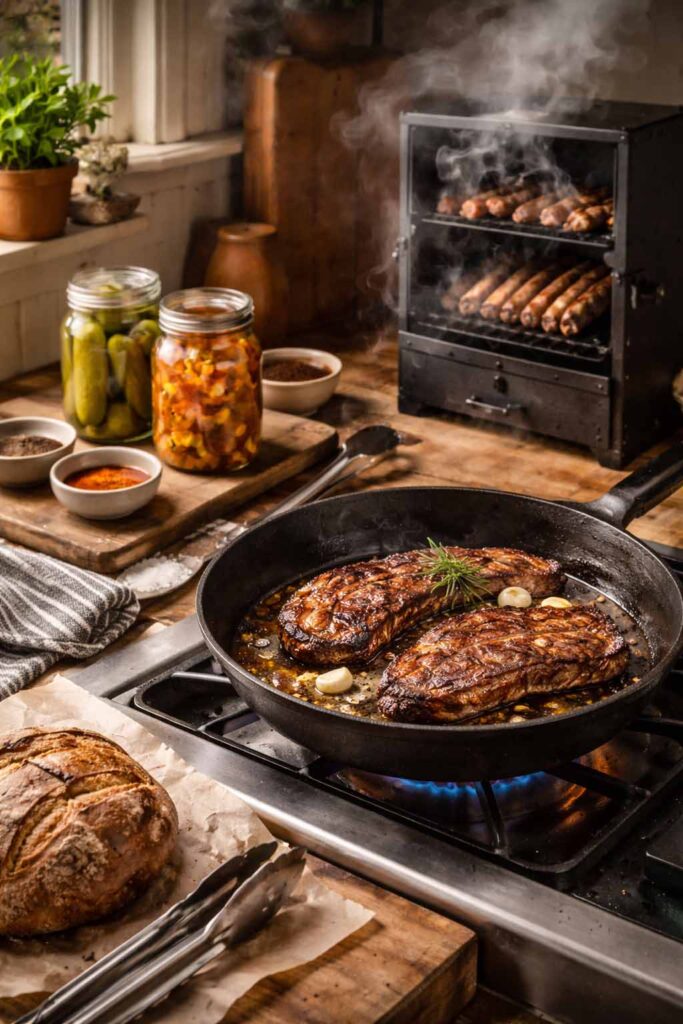
Some regions are defined by how they apply heat and time. Cast iron skillet meals create a certain crust and comfort that shows up in breakfasts and weeknight dinners.
Barbecue regions often emphasize patience, with low-and-slow cooking as a value system, not just a method. In other places, baking styles become their own identity, sometimes rooted in tradition, sometimes in local ovens, sometimes in equipment, sometimes in community.
Even when a dish is not literally cooked over flames, the contrast with wood-fired baking helps explain why texture and char matter so much in certain areas.
The side dishes and staples that quietly matter
A region’s identity is often hiding in the sides. Bean and legume dishes show up in quiet ways, soups, stews, and picnic plates. And while grits are famous, many Americans first meet corn as a supporting actor, and then realize how central it is.
This is where diners matter too, because breakfast can tell a region’s truth. Travelers who pay attention to morning menus will notice how griddle breakfast classics reveal local habits fast.
Preserving flavors, not just food
Long before modern shipping made everything feel “available,” families preserved what they had. That history still shapes taste today. You can see it in pickling and preserving, and in fermentation traditions that show up in condiments, sides, and even the way certain regions talk about “good flavor.”
Where “festival food” fits into regional identity
A lot of regional loyalty is learned outside the home, at fairs and community events. County fair foods are not “junk,” they are ritual, nostalgia, and a shared calendar.
If readers want popular festival foods worth traveling for, the best approach is to ask locals what they actually buy. That question often reveals what locals eat at county fairs, which is usually a smaller, more honest list than the tourist hype suggests.
Build your own cross-country food trail road trips (practical planning)
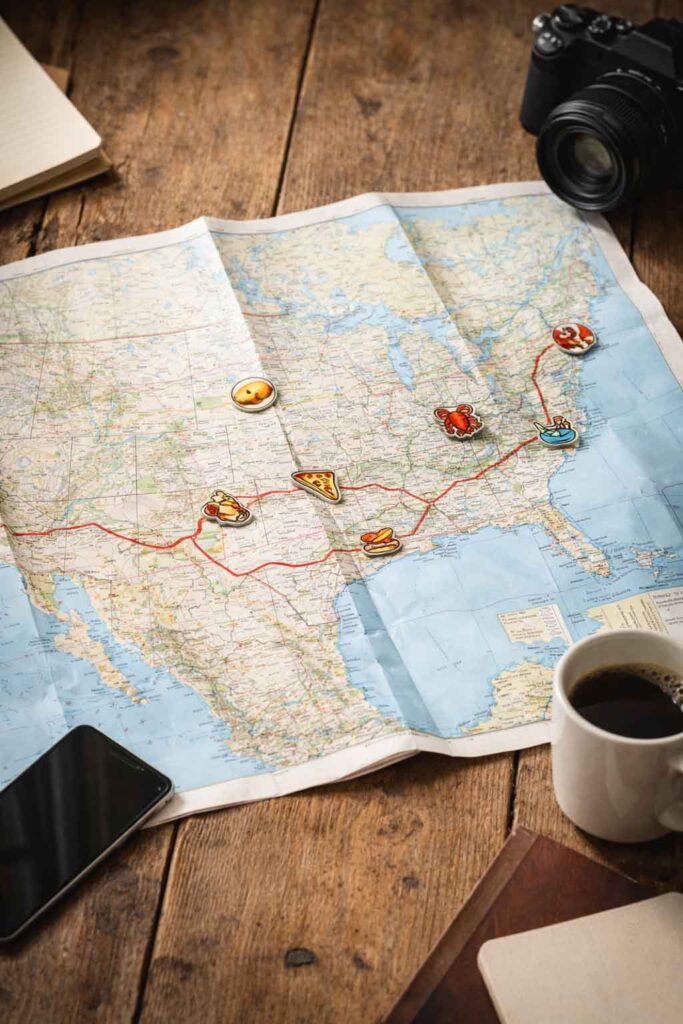
Many readers are not just hungry, they are planning. For anyone asking what to eat on a cross-country food road trip, the easiest strategy is to pick a region, pick two anchor cities, then connect the dots with smaller towns where the cooking feels less performed.
This section is meant to help turn curiosity into a plan, and it fits naturally into a food bucket list for the United States. The point is not to “collect” meals, it is to pay attention.
A simple way to plan a route (without overthinking it)
These route ideas are not rigid, they are starting points for food trail road trips that feel doable.
Route idea 1, Northeast highlights
For travelers looking for must-try foods in the Northeast, a simple loop can include New England Clam Chowder, Maine Lobster Roll, and New York-Style Bagel. The logic is freshness and tradition, with plenty of walkable stops.
Route idea 2, South and Appalachia comfort
If the goal is iconic dishes from the South and Midwest plus the soul of the hills, anchor the trip around must-try foods in Appalachia. Nashville Hot Chicken, Carolina Pulled Pork, and Memphis Dry-Rub Ribs create a clear theme, heat, smoke, and comfort.
Route idea 3, Midwest and Great Lakes classics
Families and first-timers looking for must-try foods in the Great Lakes area can build a trip around Chicago-Style Deep-Dish Pizza, Detroit-Style Pizza, and Wisconsin Cheese Curds. This route is especially friendly for travelers who like casual meals and big portions.
Route idea 4, Gulf Coast and Louisiana favorites
For must-try foods in the Gulf Coast, the flavor story gets deeper and more communal. Louisiana Gumbo, Jambalaya, and Boudin make a strong sequence, then finish with a sweet detour using Key Lime Pie.
Route idea 5, Southwest flavors
For bold, layered flavors, must-try foods in the Southwest can include Sonoran Hot Dog, Hatch Green Chile Stew, and Mission Burrito. This route also rewards travelers who like late-night eating.
Route idea 6, Mountain West and Pacific Northwest add-ons
Some travelers want the “extra chapters.” Consider this an add-on route for must-try foods in the Mountain West and must-try foods in the Pacific Northwest, chosen based on what is actually near the traveler’s path, not forced into a checklist.
How to try these dishes like a local (without feeling awkward)
Great food travel is mostly social skills and timing, not secret knowledge.
Ordering, timing, and expectations
The fastest way to avoid disappointment is to learn where to find authentic local specialties by watching who is actually eating there.
Busy locals at odd times are the best signal. Then keep ordering simple. The author’s standing rule is, “Ask one respectful question, then order the classic version first.” It is polite, it is efficient, and it usually gets better results than trying to customize everything.
Seasonal and holiday cues
Some dishes shine in certain months, and locals know it. Travelers planning cold-weather trips will find that chowders, stews, and casseroles often become the best comfort foods for winter travel.
Meanwhile, desserts can be surprisingly regional, and readers curious about best dessert traditions by state will notice patterns in citrus, dairy, and fruit.
The most helpful approach is to look for holiday table favorites and other traditional foods tied to holidays and events, then follow the menu where it leads. That also makes room for pie and cobbler varieties that are not famous nationally but matter deeply in a local context.
Quick “at home” notes, bring the region to your kitchen
Not every reader can travel, and that is fine. The point of this guide is also to help people cook with respect for place.
Shopping and cooking shortcuts that still respect tradition
A good home version starts with ingredient honesty. Buy the best version of the core ingredient you can find, keep the technique simple, and do not over-style it.
Many classics came from farmhouse cooking traditions, where practicality mattered more than perfection. When cooking at home, using a heavy pan and focusing on timing can get surprisingly close to the real thing, even without specialized equipment.
FAQs (AIO plus GEO optimized)
1) What are the best foods to try in each state if you only have a weekend?
A weekend works best when the traveler picks one metro area and one nearby small town. The goal is contrast, not volume.
A smart approach is to choose two “anchor dishes,” then leave space for whatever locals recommend on the spot. That is often how travelers accidentally find the most memorable meal, because the plan stays flexible instead of trying to cover too much.
2) Which cities are known for their signature foods, and what should a first-time visitor order?
Start with cities where the signature dish is a local habit, not a tourist performance. Visitors should order the classic version first, then experiment later.
The “right” first order is usually the one that keeps the line moving and matches what locals are holding in their hands. If a city’s food identity is real, the staff will be used to newcomers and will guide them quickly.
3) Where can you find authentic local specialties without falling into tourist traps?
Look for three signals, a small menu that does not try to please everyone, steady foot traffic from locals at odd hours, and staff who sound like they have repeated the same recommendation a thousand times.
Travelers can also ask, “What do you order when you are hungry?” That question gets better answers than “What is most famous?” because it targets real habit.
4) How barbecue styles vary across states, and what should beginners try first?
Barbecue changes based on meat choices, smoke approach, and sauce culture. Beginners should start with one iconic item per region, then compare texture and seasoning rather than obsessing over “best.”
Brisket is a clean baseline for smoke and beef flavor, pulled pork highlights tenderness and seasoning, and ribs teach balance. The best learning strategy is to try small portions at two places, not one huge plate.
5) What are famous comfort foods by region that are easy to find year-round?
Many comfort foods are available all year, but quality shifts with local sourcing and the skill of the cook. Travelers will usually find reliable versions of city sandwiches, classic pizzas, and diner-style plates in any season.
For soups and stews, colder months often bring better results because kitchens make them more frequently. For seafood, regional sourcing tends to matter more than the calendar.
6) What are the must-try foods in the Northeast for first-time visitors?
A Northeast-first itinerary works best when it mixes seafood tradition with city bread culture. Visitors can plan around one chowder stop, one lobster roll stop, and one bagel morning.
The key is to eat these foods close to where they are part of daily life, not in a generic “tourist corridor.” A little planning helps, but letting locals steer the second meal usually improves the trip.
7) What are the must-try foods in the Southwest if you like bold flavors?
The Southwest is ideal for travelers who love layered spice, smoky char, and toppings that feel personal to a neighborhood. Start with one street-style favorite, then add a stew or chile-based dish for depth.
The best strategy is to eat earlier in the day, then return for a late-night bite, because many of the most memorable meals happen after dark in this region.
8) What are the must-try foods in the Great Lakes area for families traveling with kids?
The Great Lakes region is family-friendly because the food is often straightforward, shareable, and filling.
Families can build a trip around pizza styles and snackable regional sides, with plenty of options for picky eaters. Ordering a few items to split is usually smarter than everyone getting their own main. It creates variety and keeps the meal fun, especially when kids want “a bite of everything.”
9) What locals eat at county fairs, and what is actually worth buying?
Locals usually buy one or two “every year” foods, then one novelty item. The best purchases are often the simplest, fresh items made quickly and served hot.
Travelers should watch what people buy repeatedly, not what gets photographed. If there is a long line at a stand that sells just a few things, that is often the real signal that the food is worth the wait.
10) What are classic sauces and seasonings by region that change the flavor the most?
The most impactful differences often come from classic sauces and seasonings by region, especially when they reflect local preference for tang, smoke, or heat. In barbecue regions, sharp profiles like vinegar-based sauces can completely change how pork tastes.
In spice-forward areas, spice blend profiles define the “signature” flavor more than the protein does. And nationwide, hot sauce culture adds personal customization, the same dish can taste different at the same table.
Author Bio
Keller is a U.S. food culture writer who documents local food traditions, regional specialties, and the stories behind everyday dishes. Published by Ahmed Saeed.