

Disclaimer: This article is for informational purposes only and does not provide legal, medical, or financial advice. Technology features and policies can change, always review your device settings and consult qualified professionals for personal guidance.
It is hard to notice how much automation is already baked into an ordinary day, until something breaks. A phone alarm goes off, lights come on, a thermostat adjusts, maps reroute around traffic, and a bank app quietly flags a weird transaction.
In AI in America, that “quiet help” is becoming the default layer between people and the services they use, at home, at work, and on the road.
This article is written in a third-person narrative, but it includes a few short, first-person notes from “the author’s field diary” so readers get the practical, lived feel, without turning the whole piece into a personal memoir.
The goal is simple, explain what is actually changing in daily life, what is genuinely useful, what introduces risk, and what a normal person can do about it.
A quick note on tone and scope: this is informational, not medical, legal, or financial advice. It focuses on real consumer experiences, practical settings, and the agencies and standards shaping how these products are built and marketed in the United States.
AI in America, what “smart” really means in daily life
The invisible layer behind modern convenience
Most consumer “AI” is not a robot walking around the kitchen. It is algorithmic decision making that ranks, scores, and predicts.
It decides which notification gets surfaced first, which route looks “fastest,” which product appears at the top of a list, and which message gets labeled suspicious.
That is why predictive recommendations have such an outsized impact. They guide attention. In streaming, they shape watchlists, in shopping, they shape carts, and in commuting, they shape routes.
When people say “my phone knows me,” they are often reacting to a system that has learned patterns from clicks, location history, and similar users.
The practical point, and this matters for trust, is that these systems are optimized for measurable outcomes, for example, engagement, completion, or conversion. They can be helpful, but they are not neutral.
Where the intelligence runs
On your device vs in the cloud
Two technical shifts are changing how consumer AI feels in the real world. First is on device machine learning, where the model runs locally for speed and privacy.
Second is the rise of edge computing devices, which push processing closer to where data is created, like a camera doing recognition on a local hub rather than uploading everything.
When these systems run locally, responses are faster, outages are less disruptive, and sensitive data may travel less. When everything runs in the cloud, it can be more powerful and more consistent across devices, but also more dependent on connectivity and policy choices.
Why companies push AI features now
From a consumer view, AI features built into smartphones are becoming a new interface layer, summarizing, sorting, translating, and suggesting. From a product view, there is also a hardware story.
Modern AI capability is tightly tied to chips and compute, and NVIDIA is often referenced in discussions about the infrastructure powering many AI workloads. Most readers will never see that part, but they will feel the result, faster and more “personal” experiences.
At home, the new normal is smart assistance
Smart home automation, what actually works day to day
In a typical American home, smart home automation starts with convenience. Lights that follow schedules, thermostats that lower temperatures at night, and routines that reduce small, daily friction.
Field diary note (first-person quote): “The author automated lights and the thermostat first, because those were easy wins. They refused to automate door locks until they had a reliable backup plan, plus a clear way to revoke access.”
That practical sequencing matters. The “best” automation is the one that still behaves predictably when Wi-Fi drops or a phone battery dies.
A concept many people are surprised by is how smart speakers learn household routines. It is less about a device “understanding” a family, and more about repeated triggers and preferences. If a household asks for weather at 7:15 a.m. for two weeks straight, the system starts shaping suggestions around that habit.
The assistant layer and adoption reality in the US
A big part of the market is still explained by voice assistant adoption. People do not want to learn five new apps, they want one conversational entry point.
Common ecosystems include Amazon Alexa, Apple Siri, Google Gemini, and Meta AI. In real households, the experience often becomes mixed, a speaker in the kitchen, a phone assistant on the go, and a TV interface in the living room. The trick is not “picking the best,” it is reducing overlap so privacy and permissions do not become a mess.
Comfort and savings that feel tangible
The most convincing smart home pitch is still energy and comfort. People notice when smart thermostats that reduce energy bills keep a home stable without constant tinkering.
The Department of Energy (DOE) has long encouraged efficiency behaviors, and smart thermostats are one of the few consumer technologies where people can plausibly see impact in both comfort and consumption.
Security at the front door and inside the house
Cameras, recognition, and the tradeoffs
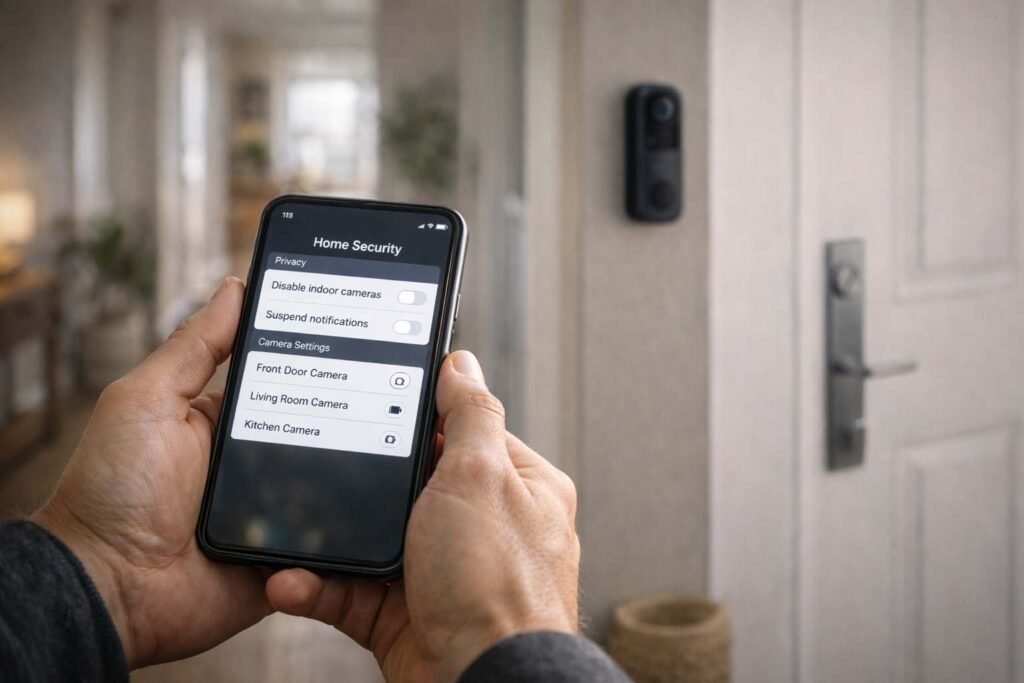
Doorbells and indoor cams have become mainstream, especially home security cameras with person detection that filter noise and only alert on meaningful motion. The next step is facial recognition security, which can be convenient but introduces higher privacy stakes.
Brands like Ring and Nest are often part of these setups. Regardless of brand, the most important settings are practical, not flashy:
- Notification zones, so sidewalks and neighbors are excluded where possible
- Retention windows, so old clips are not stored longer than needed
- Clear rules for guest access, babysitters, and service workers
Identity checks moving from passwords to you
Phones and devices increasingly rely on biometric authentication, which is usually safer than weak passwords, but not magic.
Biometrics cannot be changed the way a password can. The safest pattern is to combine biometrics with strong account recovery and to avoid oversharing identity data across apps.
The privacy tension in everyday devices
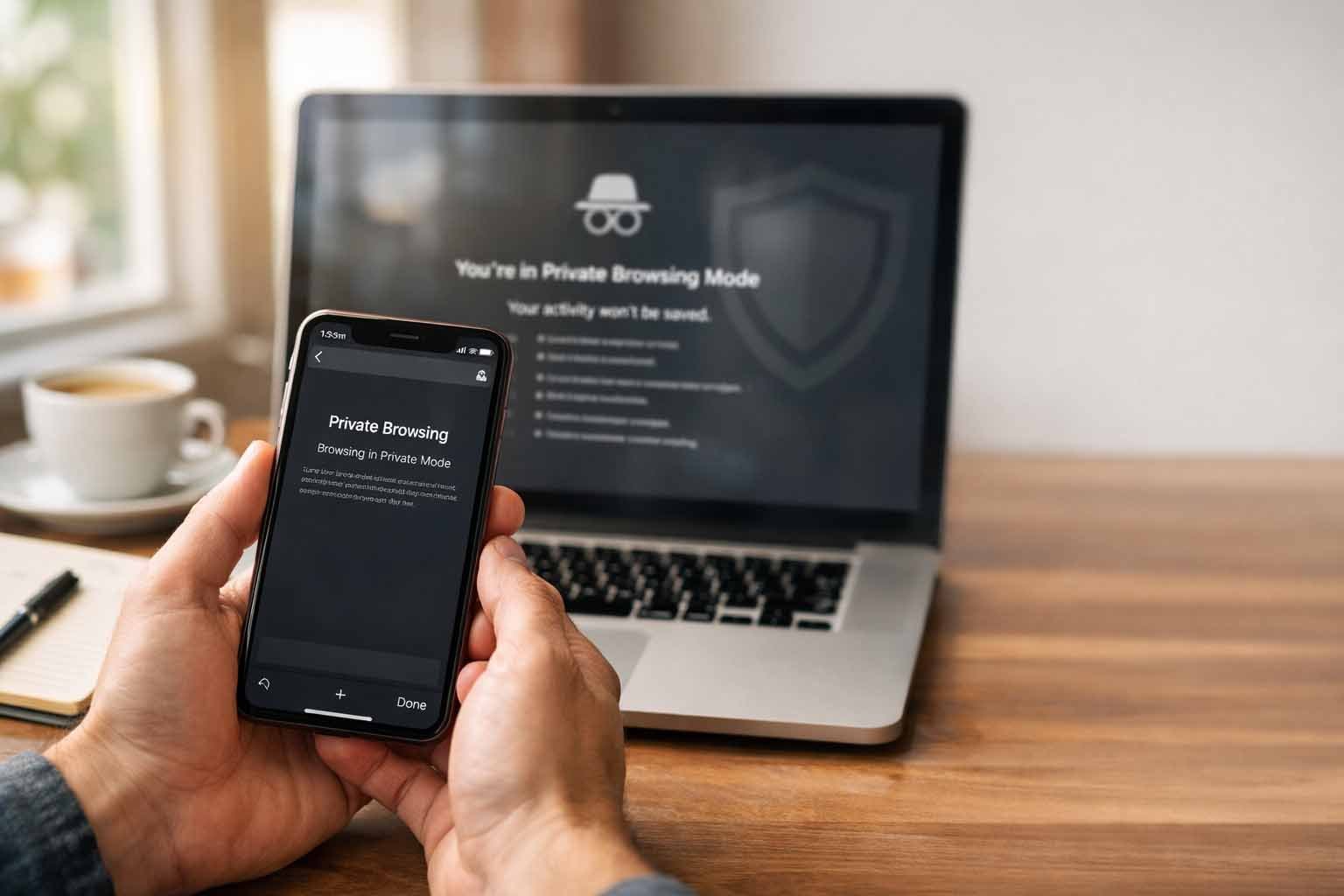
This is where many consumers get uneasy. There are real privacy concerns with always on microphones, even when vendors say they only “listen” for wake words. Separately, data collection from connected devices is often broader than people expect. Devices can reveal routines, sleep schedules, and even when a home is empty.
In the US, consumer-facing enforcement and guidance often connects to agencies like the Federal Trade Commission (FTC), and communications-related issues can intersect with the Federal Communications Commission (FCC). Consumers do not need to memorize regulatory structures, but they should recognize that “smart” always comes with policy, disclosure, and enforcement questions.
Field diary note (first-person quote): “The author’s speaker misheard a command late at night, turned on a playlist, and woke everyone up. After that, they changed microphone settings, set quiet hours, and turned off voice purchases.”
Your phone is now your primary AI device
Why smartphones became the AI control center
For many Americans, the phone is the main place AI shows up, not as a single app, but as a layer inside everything. When AI features built into smartphones summarize messages, clean up photos, and suggest replies, they change daily rhythm in subtle ways.
One feature people appreciate quickly is real time translation in everyday conversations, especially for travel, mixed-language families, and customer service situations.
It reduces friction, but it also increases reliance on systems that can sometimes misinterpret nuance, so sensitive conversations still benefit from human confirmation.
Everyday productivity wins
Two practical tools are widely adopted because they save time without requiring a new workflow, tools that auto summarise emails and meetings, and AI scheduling tools that coordinate calendars.
Field diary note (first-person quote): “The author’s rule was simple, auto-summaries were allowed for low-stakes threads and internal planning, but anything legal, medical, or financial stayed manual, with a quick human verification step.”
That kind of rule keeps convenience while avoiding the biggest failure mode, people trusting a summary that left out the one line that mattered.
Shopping, pricing, and the recommendation economy
How personalisation shapes what people buy
Retail has become a playground for AI powered personalisation, built to predict what a customer might want next, and how to nudge them toward it. Consumers see this as AI powered shopping suggestions in major retailers, similar items, “frequently bought together,” and personalized homepages.
These systems run on signals, browsing history, previous purchases, location, and time. The consumer impact is not just convenience, it is that choice architecture changes. People see a narrower slice of the catalog, filtered by what the system expects will work.
Pricing and promotion mechanics consumers rarely see
Behind the scenes, retailers often use dynamic pricing algorithms, with models informed by retail demand prediction, inventory optimisation, and supply chain forecasting. This does not automatically mean unfairness, but it does mean prices can move quickly, and promotions can be personalized.
A practical consumer test that stays grounded and fair is simple: compare prices logged in vs logged out, compare across devices, and compare at different times of day. The goal is not to “catch” a company, it is to understand how pricing might vary and to buy with eyes open.
“Why did it recommend that?”
Many consumers want one thing, a clear explanation. The question of understanding why an algorithm recommended something is tied to the broader idea of transparency. Sometimes platforms provide small explanations, “because you bought X,” and sometimes they do not.
This is where the concept of explainable model outputs becomes practical. A good consumer-facing system should provide a reason that a normal person can understand, plus a way to adjust preferences.
Getting around, AI in cars, maps, and city streets
Navigation is now predictive, not reactive
A decade ago, navigation was about maps. Now it is about prediction. AI driven navigation and traffic prediction anticipates congestion, reroutes earlier, and sometimes changes route mid-trip based on shifting conditions.
On the vehicle side, connected vehicle systems share status, usage data, and sometimes diagnostics. In cities, traffic signal optimisation is part of modern smart city infrastructure, where signals can adapt to flow rather than stick to fixed timing.
These changes often intersect with transportation policy and planning, so it is useful to recognize institutions like the Department of Transportation (USDOT) as part of the broader ecosystem, even if consumers do not interact with it directly.
Driver assistance is mainstream, autonomy is still limited
Driver assistance has moved from luxury to standard. Many vehicles include driver assistance features, especially those marketed as driver assistance that helps prevent collisions, like lane keeping and automatic emergency braking.
Some high-profile systems, including Tesla Autopilot, are widely discussed, but the practical consumer message stays consistent. Assistance is not autonomy. A driver is still responsible, and safety guidance often points back to resources like the National Highway Traffic Safety Administration (NHTSA).
Robotaxis and delivery experiments in the US
Autonomous ride services have also become part of the conversation, with names like Waymo and Cruise frequently cited. Mobility platforms like Uber shape how people think about on-demand transit, even when the ride itself is not autonomous.
Field diary note (first-person quote): “The author still preferred manual control in heavy rain at night, even with assistance features. Their view was not anti-technology, it was about matching tools to conditions.”
That is the right mental model, not “trust” vs “fear,” but fit-for-purpose.
Health and wellness, where AI can help, and where it must be careful
Quick help vs medical care, do not mix them up
Many consumers encounter health AI through chat interfaces and symptom tools, including telehealth AI triage and symptom checkers used before urgent care visits. These can be helpful for deciding whether something is urgent, or what questions to ask, but they are not a substitute for clinical judgment.
Field diary note (first-person quote): “The author treated symptom tools as a question list, not a diagnosis. They wrote down symptoms, timing, and medications, then used that list to talk to a clinician.”
Clinical use cases, big promise, high responsibility
In clinical settings, AI can support workflows, especially AI support for doctors in diagnosis and medical imaging analysis. These use cases are higher-stakes, so oversight matters, and in the United States that conversation often intersects with the Food and Drug Administration (FDA).
The consumer takeaway is not to fear clinical AI, but to expect guardrails, validation, and clear accountability.
Wearables and everyday monitoring
Wearables have turned everyday life into data streams. wearable health tracking can encourage healthier behaviors, but it also raises questions about what gets stored, where, and how it might be used.
Health privacy in the US is frequently discussed through the lens of the Health Insurance Portability and Accountability Act (HIPAA), although consumers should remember that many consumer apps and devices are not always covered the same way as traditional healthcare providers. The practical move is to read privacy settings, limit sharing, and delete old data when it is no longer useful.
Mental health tools, useful guardrails
A growing category includes mental health apps with conversational coaching. These can support reflection and habit-building, but users should be clear-eyed, they are not therapists, and they cannot handle emergencies. For severe symptoms, professional care is the right next step.
Money, fraud, and identity, AI as protector and threat
The best use of AI in finance is often invisible
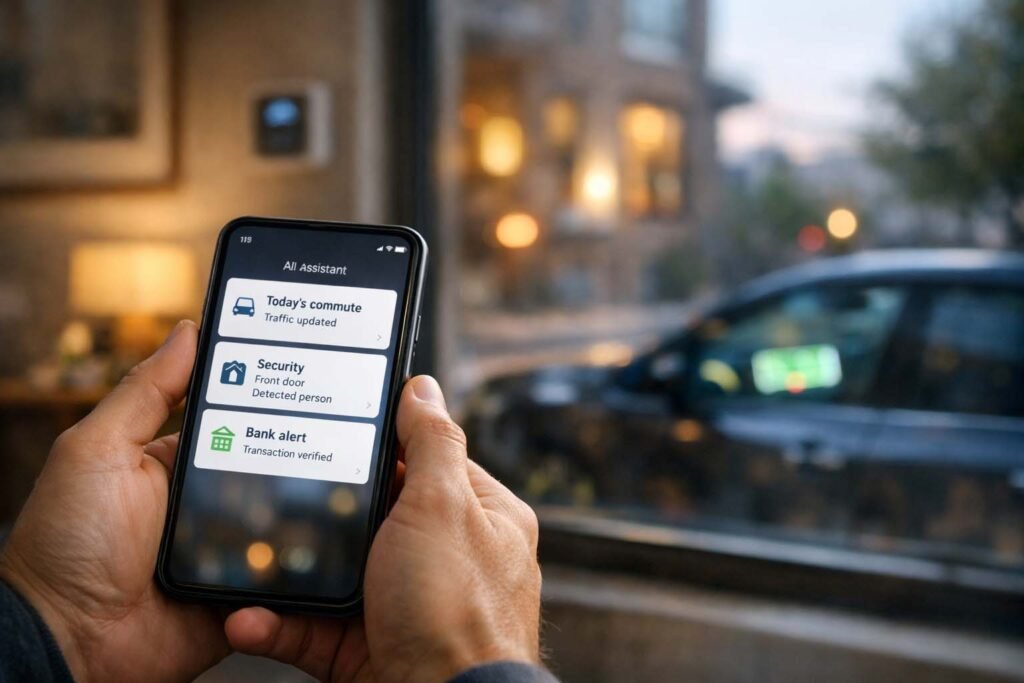
For many consumers, the most “successful” AI is the kind they barely notice, until it stops something bad. Banks and payment networks use fraud detection systems to spot abnormal patterns. Consumers see the results as instant fraud alerts for card transactions, often within seconds.
Outside banking, people also rely on spam call filtering and scam detection, which has become essential in the US. On the security side, companies deploy phishing prevention automation and cybersecurity anomaly detection to catch suspicious behavior.
It is helpful to recognize agencies like the Cybersecurity and Infrastructure Security Agency (CISA) as part of the national conversation about cyber resilience, even if consumers mainly experience the downstream effects, fewer successful scams, more warnings, more authentication prompts.
Credit and risk models, what consumers should understand
Lending decisions often involve models, including credit risk modelling, which can affect approvals and rates.
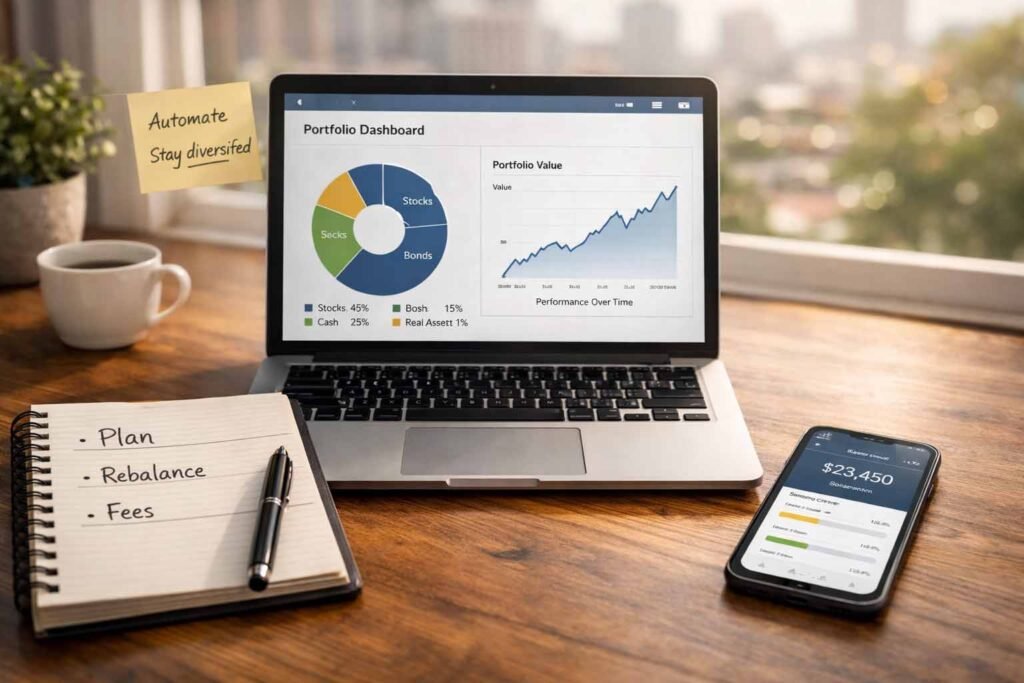
Consumers who feel harmed by an error or unclear process often look for rights and complaint pathways, and the Consumer Financial Protection Bureau (CFPB) is frequently mentioned in that context. For investing-related issues, the Securities and Exchange Commission (SEC) sits in the background as a key regulator.
A practical safety checklist that is actually usable
This section is intentionally tactical, because security advice fails when it is too abstract.
Low effort, high impact steps
- Turn on banking and card alerts, for every transaction, not just large ones
- Use passkeys when available, and avoid SMS-only recovery when possible
- Review app permissions quarterly, remove old apps that still have access
- Use separate email addresses for banking vs newsletters and shopping
- Keep biometric authentication enabled, but also verify account recovery options
If a system flags something incorrectly, treat it as a signal to review settings, not as a reason to turn protection off.
Work and content creation, productivity goes up, but so do expectations
The office shift, copilots everywhere
In many workplaces, AI is arriving as a co-worker, not a replacement. Teams adopt workplace productivity copilots, including workplace copilots for writing and spreadsheets, to speed up drafts, summaries, and analysis.
Common tools in this space include Microsoft Copilot, IBM watsonx, and OpenAI. The key skill is not “prompt tricks,” it is judgment. People still need to check outputs, avoid leaking sensitive data, and know when a tool is wrong but confident.
Field diary note: “The author’s rule was to never paste confidential client data into a general tool, and to treat outputs as a first draft that must be verified.”
Creating marketing and media faster
Modern workflows often include generative content creation, from text drafts to visuals. Many teams now use AI generated images used in marketing content, and accessibility is improved with automated video captions and accessibility tools.
The ethical line should be clear. Label edits when appropriate, respect licensing, and do not use AI to mislead people about what is real.
Hiring, screening, and fairness concerns
Hiring is increasingly shaped by automated filters, which raises concerns about hiring software and resume screening risks. The constructive path forward includes algorithmic bias mitigation and human in the loop review, meaning a qualified person reviews decisions and can override a flawed model.
The workforce transition
Even when jobs are not eliminated, they change. That is why workforce reskilling needs are now part of normal career planning. The durable advantage is domain knowledge plus verification habits, not merely tool familiarity.
School and learning, personalized help with clear boundaries
Learning support that actually helps students
Schools and families are experimenting with personalised learning tools and AI tutoring platforms. In some districts, the conversation also includes personalised lesson plans in K 12 classrooms, where teachers use tools to adapt content, pace, and examples.
The best evaluation questions are practical:
- Does it cite sources and show steps
- Does it store student data, and for how long
- Can parents see and control settings
- Does it encourage critical thinking, or just provide answers
Integrity and originality in the AI era
Education also needs clear norms around originality. Tools for plagiarism checks and originality scoring can help, but the healthiest approach is teaching process, citations, and reasoning. A student who can explain how they reached an answer is learning, even if they used a tool to practice.
Media, feeds, and trust, what to believe, what to verify
Feeds are optimized systems, not neutral timelines
Most Americans now consume news and entertainment through ranked feeds. personalised news feeds and content ranking decide what gets seen and what disappears. This is not always malicious, but it changes public understanding because people can live in different information environments without realizing it.
Consumer-facing guidance often shows up through sources like Consumer Reports, and mainstream reporting outlets like The New York Times frequently cover how these systems affect public life. Readers do not need to agree with any single outlet to learn one key habit, compare sources, and do not assume the first result is the best result.
Field diary note (first-person quote): “The author built a small verification habit, they checked one additional source before sharing, and they used reverse image checks when something looked unusually emotional.”
Moderation, elections, and synthetic media
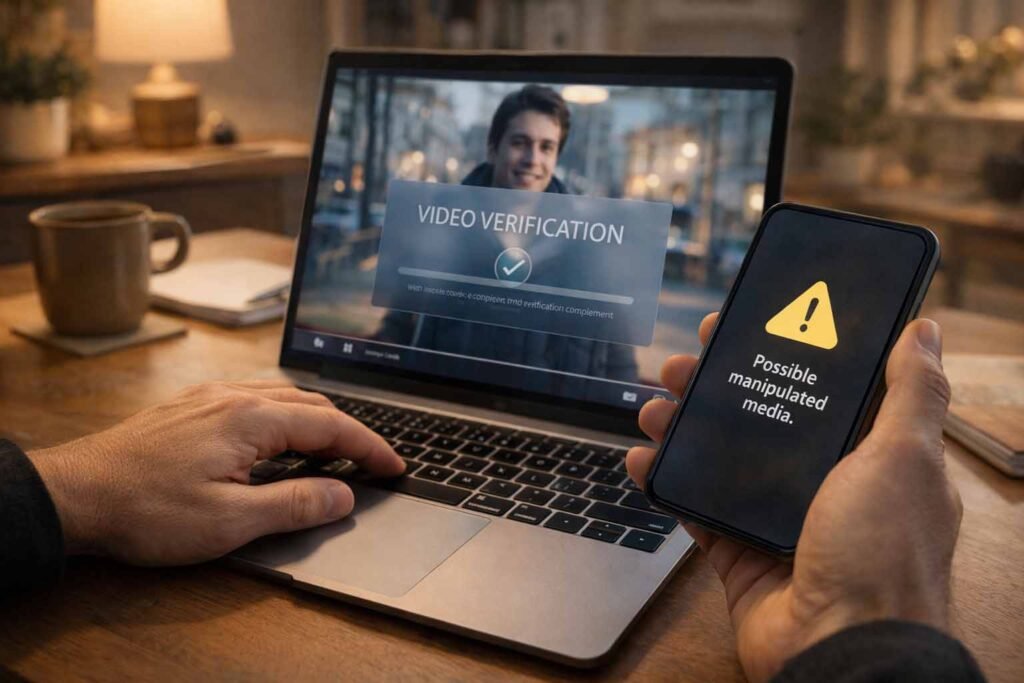
Platforms use automated systems for content moderation on social platforms, and the stakes get higher around civic moments. Many people now hear about detecting synthetic media in elections season, partly because deepfakes are more accessible.
That is why deepfake detection tools matter, not because they catch everything, but because they raise the cost of deception. A good consumer habit is to slow down, verify origin, check timestamps, and avoid sharing based on outrage alone.
Privacy, consent, and responsible use, the rules and the reality
The privacy toolkit consumers should demand
Most people do not want to read a 30-page policy. They want meaningful control. Two concepts are increasingly important, privacy preserving analytics, which aims to learn from usage without exposing individuals, and data consent management, which should make it easy to say yes, no, or “only for this purpose.”
In practice, real consent should look like:
- Clear toggles, not buried settings
- Short retention, with simple deletion
- Separate choices for personalization vs essential functionality
- Straightforward export options, where feasible
Standards and governance shaping consumer AI
The public conversation about guardrails includes responsible technology governance, where organizations define how models are tested, monitored, and audited.
In the United States, standards work is often associated with the National Institute of Standards and Technology (NIST), and many policy discussions reference the NIST AI Risk Management Framework as a way to talk about risk, documentation, and accountability.
Government direction has also been shaped by the White House Executive Order on Artificial Intelligence (2023), which pushed agencies to coordinate on safety, security, and consumer protections.
Consumers do not need to memorize frameworks, but they can use them as a mental checklist. A serious product should be able to explain how it handles risk, bias, privacy, and failure modes.
Customer support is changing fast
Customer support is increasingly run by systems designed to scale, including automated customer support and intelligent virtual agents. Done well, that means faster answers and 24/7 availability. Done poorly, it means loops, dead ends, and no accountability.
A simple consumer strategy is to document interactions and ask for escalation paths early. Written records are often more effective than long back-and-forth chats.
A safer settings playbook for families
Many households want the convenience without the creepiness. Practical ways families can set safer AI settings include:
- Turn off voice purchases, or require a PIN
- Create child profiles and limit explicit content
- Disable unnecessary microphone access for apps
- Set camera privacy shutters or schedule “off” hours
- Review permissions monthly for devices used by kids
What US rules are shaping consumer AI products
The short version is that multiple institutions shape the market, sometimes through standards, sometimes through enforcement, sometimes through sector rules. For consumers, the useful takeaway is to watch for transparent disclosures, easy opt-outs, and clear pathways to complain or appeal decisions. When companies cannot explain how decisions are made, or when they hide meaningful consent behind confusing settings, consumers should treat that as a red flag.
Closing, how to adopt smart tech without losing control
Smart tech is not a single thing, it is a layer that now sits inside homes, phones, cars, banks, classrooms, and media platforms.
The opportunity is real, less friction, faster work, fewer scams, and better personalization when it respects boundaries. The risk is also real, systems that nudge behavior, collect too much data, or make decisions that are hard to challenge.
A good consumer stance is neither panic nor blind trust. It is a quarterly audit mindset. Check privacy settings, remove unused permissions, keep security protections on, and teach a simple verification habit at home. Convenience is fine, but it should never require giving up control.
FAQs
1) What changes the most in American daily life right now?
The biggest changes show up in small moments, phones prioritizing messages, apps ranking content, navigation predicting routes, and support chats answering basic questions instantly.
This is driven by predictive systems that learn patterns and optimize for outcomes like speed or engagement. The practical move for consumers is to keep convenience features on where they help, but review privacy and permissions regularly so the “help” does not become unwanted tracking.
2) Are smart speakers always listening, and what can people do about it?
Smart speakers are designed to detect wake words, which is why many consumers worry about constant capture. The safest approach is practical, review microphone controls, turn off voice purchasing, use mute buttons when needed, and check account history for recordings.
Households using Amazon Alexa or Apple Siri should also set up household profiles and limit permissions for third-party skills.
3) How can someone tell if a home camera uses facial recognition?
Consumers should look for features labeled face recognition, familiar faces, or identity alerts. If enabled, the camera may categorize or tag people.
Many systems let users turn these features off while keeping motion detection. Ring and Nest style products typically expose these controls inside their app settings, along with retention and sharing options.
4) Do retailers change prices for different people using AI?
Retail pricing can shift for many reasons, supply, demand, time, and promotions, and some systems do use personalization signals.
A fair way to check is to compare logged in vs logged out browsing, compare across devices, and track timing over a few days. If pricing feels confusing, using price alerts and delaying non-urgent purchases can help.
5) Is driver assistance the same as self-driving?
No. Driver assistance supports a driver, it does not replace them. Features like lane keeping and emergency braking can reduce accidents, but a human remains responsible.
For systems marketed with advanced branding, including Tesla Autopilot, consumers should read the limitations and follow safety guidance from sources like the National Highway Traffic Safety Administration (NHTSA).
6) Can symptom checkers replace a doctor visit?
They can help organize information, but they should not replace clinical care. Symptom checkers are best used to create a question list and decide urgency, especially when combined with a clinician conversation.
In higher-stakes medical AI contexts, oversight and validation are often linked to frameworks and approvals associated with the Food and Drug Administration (FDA).
7) How do banks detect fraud so quickly?
Banks and payment networks use models trained on transaction patterns, location signals, and behavioral anomalies to flag suspicious activity. Consumers experience this through instant alerts and temporary blocks.
A practical tip is to enable alerts for all transactions, not only large ones, and to keep account recovery options strong so protection does not lock a user out.
8) Are workplace copilots safe for confidential data?
They can be, but only with clear policies. Workers should assume that anything pasted into a general tool could be stored or reviewed depending on settings and agreements.
Teams using Microsoft Copilot, OpenAI, or internal IBM watsonx deployments should follow company rules, redact sensitive information, and verify outputs because confident errors still happen.
9) How can parents use AI tutoring without hurting learning?
Use tutoring tools for practice, explanation, and feedback, not for copying answers. Ask students to show steps, cite sources, and explain reasoning out loud. Parents should also review privacy settings, especially if tools store student data, and encourage kids to treat AI responses as suggestions to check, not authority.
10) What should consumers look for in “responsible AI” claims?
Look for transparency, easy opt-outs, data retention limits, and clear appeal paths when automated decisions affect a user.
Strong products explain how they handle bias, security, and errors, and they offer understandable reasons for recommendations. References to frameworks like the NIST AI Risk Management Framework can be a good sign, but only if the product behavior matches the claim.
Author Bio
Blake is a consumer tech writer who focuses on how everyday people actually use smart devices, and how to stay practical about privacy and security. Published by Ahmed Saeed.