




Disclaimer: This article is for general information only and is not financial or tax advice. Fuel prices, taxes, and personal situations vary, so always check current data and consult a professional before making decisions.
Introduction: Why Fuel Costs Need a Real Plan
For most drivers, fuel is just a line on the bank statement swipe, pump, forget. Then one day they open their app and wonder “how much should I set aside for fuel each month?” That’s usually the moment they start looking for a gas budget calculator instead of just hoping the account balance survives until payday.
A structured monthly fuel expense planner turns random receipts into a predictable household transportation budget. Instead of reacting to every jump at the pump, drivers can find out how much they really spend at the pump, see where the money goes, and stop uncomfortable surprises.
That’s especially important for anyone living on paycheck-to-paycheck fuel planning, where one unexpected refill can throw off groceries, bills, or debt payments.
In practice, smart drivers lean on tools and data, not just gut feeling. They check GasBuddy, read updates from AAA (American Automobile Association), watch trends from the U.S. Energy Information Administration (EIA), and pay attention to the Consumer Price Index for gasoline and local regional fuel price indexes.
This article pulls all those ideas together into a practical, structured system that any reader can copy, adapt, and grow.
How a Gas Budget Calculator Fits into a Money System
What This Planner Actually Does
At the core, a fuel plan is just a structured budget template for fuel spending. It might live in a spreadsheet, a note-taking app, or a budgeting tool, but it always does the same job: collect realistic miles, prices, and trips so the driver can turn driving habits into a monthly fuel plan instead of guessing.
The same framework can act as a personal MPG-based fuel cost planner and a monthly fuel expense planner at the same time. It translates distances, routes, and vehicle details into dollars, then folds those dollars neatly into personal finance fuel allocation and the broader household transportation spending category.
For many, the real breakthrough happens when they calculate their monthly car fuel expenses automatically. Once the sheet or app handles the math, it becomes much easier to check if current fuel spending is too high and know how much of their paycheck goes to fuel without spending hours on a calculator.
Calculator vs. Guesswork at the Pump
Before using any structured method, most people simply swipe their card and hope for the best. Only later do they find out how much they really spend at the pump, usually when money is already tight.
A proper planner flips that around. Instead of reacting, drivers estimate monthly car fuel costs ahead of time, build in a buffer, and then use a weekly fuel budget tracker to stay aligned. If numbers drift, it’s obvious early. That’s the difference between quiet confidence and end-of-month panic.
The Types of Costs a Proper Planner Should Capture
A good system covers more than just the obvious car ownership fuel expenses like commuting and errands. It also includes:
- A detailed commute fuel cost breakdown for work and college.
- A clear daily driving cost breakdown for errands and school runs.
- A separate road trip fuel cost estimator tab for holidays and weekends.
- All those extras that quietly add up: toll road fees, fuel surcharge policies, parking, and fees in urban commuting zones.
- Mobility alternatives like electric vehicle charging costs, the monthly price of a public transit pass, and app-based rides.
By capturing every category in one place, a planner becomes the control center for real-world driving, not just another spreadsheet.
Data Needed Before Building a Fuel Plan
1. Fuel Price Inputs: Turning Volatile Prices into Real Numbers

Live U.S. Gas Prices (Updated Weekly)
One of the most useful starting points is a tool that shows Live U.S. Gas Prices (Updated Weekly). With one quick check, drivers can anchor their plan in current prices instead of last year’s memory.
Combined with GasBuddy and detailed regional fuel price indexes, this makes true real-time fuel price planning possible. The planner can hold both current prices and a conservative “shock” price so the driver can track how changing gas prices affect the budget across different scenarios.
Official and Reference Data Sources
For longer-term planning, drivers often look at U.S. Energy Information Administration (EIA) charts and similar dashboards. That’s where they can forecast fuel costs if prices keep increasing instead of assuming the current price will last.
Pairing those charts with the Consumer Price Index for gasoline helps quantify fuel inflation impact on budget and build a realistic annual fuel cost projection. Instead of guessing, the planner can project fuel expenses for the rest of the year using modest and aggressive inflation assumptions side-by-side.
2. Vehicle Data: Knowing Real Consumption
Fuel Economy, MPG and km/L
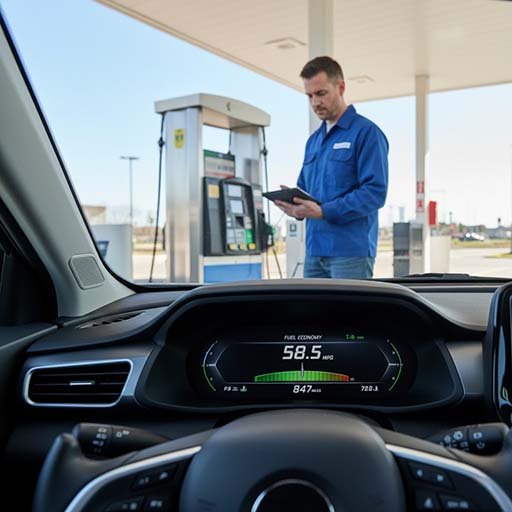
Every fuel plan should start with the vehicle’s actual efficiency. The technical term miles per gallon (MPG) describes how far a vehicle travels on one gallon of fuel, while kilometers per liter (km/L) is the metric equivalent.
Factory fuel economy ratings are a good baseline, but they’re not the full story. Real-world drivers lean on on-board trip computer fuel readouts, independent reviews, and local testing to understand how their MPG affects monthly expenses. The closer the planner reflects real conditions, the more accurate it becomes.
Different Vehicle Types and Budget Impact
Not all vehicles impact the budget equally. A gasoline-powered sedan will use fuel very differently than a compact crossover SUV or a diesel engine vehicle. Add in a hybrid electric vehicle or plug-in hybrid vehicle, and suddenly the math changes again.
A solid plan helps the driver compare car fuel consumption across several options. That’s invaluable when they estimate fuel costs before buying a new car. A few minutes of spreadsheet work can reveal that the “cheaper” vehicle might actually cost much more in fuel over five years.
Monitoring and Devices
For data-focused drivers and business owners, tools such as fuel consumption monitoring devices and full fleet fuel management systems make tracking even easier. They capture trips, costs, and refills automatically and export that data directly into expense tracking spreadsheets for deeper analysis of mileage-based fuel spending.
3. Driving Pattern Inputs: When and Why the Car Moves
Daily Commute and Work Trips
Understanding day-to-day travel is key. Many people start by mapping their commute to figure out fuel costs based on their daily commute. Distance, traffic patterns, and average speed all factor into the picture.
With that map in hand, a work commute cost estimator can find the cheapest commute based on fuel costs, including toll routes versus free routes. Tools that compare fuel costs for different routes to work help drivers see if a slightly longer path might actually save money over time.
Family Life: School Runs and Errands
Parents often check how much fuel money goes on school runs and weekend errands. Once those trips are counted, they can be rolled into a single daily driving cost breakdown. Combined with a method to track gasoline spending by trip, this helps families see which routines are expensive and where adjustments might be possible.
A tailored family car fuel budget tool can include those elements, ensuring that school routes and grocery runs are fully visible instead of hidden in vague “miscellaneous” categories.
Weekends, Road Trips, and Big Life Changes
Weekend travel and holidays can dramatically change fuel use. This is where a dedicated road trip fuel cost estimator and the ability to calculate fuel costs for weekend trips in advance become powerful.
When people move or change jobs, they can compare fuel spending before and after moving or budget for fuel when starting a new job far away. That’s especially important in areas with high suburban commuter fuel costs, where a seemingly small move can create a very expensive commute.
Step-by-Step: Building a Monthly Fuel Expense Planner
Step 1 – Create a Structure for Mileage-Based Fuel Spending
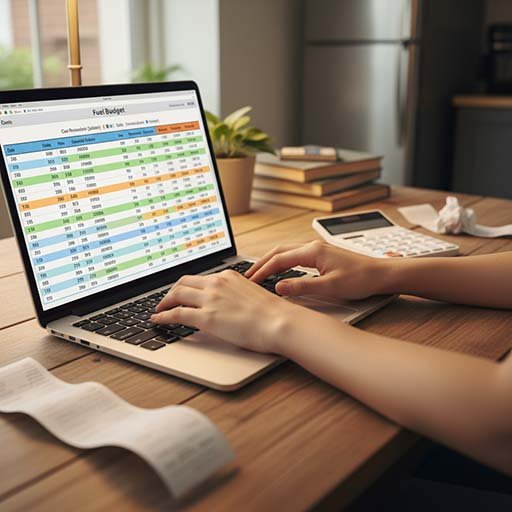
The foundation is a clear table for mileage-based fuel spending. Columns typically include distance, fuel cost per kilometer planner inputs or MPG values, and the price per unit of fuel.
Some drivers prefer an MPG-based fuel cost planner, while others think more naturally in terms of a petrol cost per mile tool. Either way works, as long as one method is chosen and used consistently.
Step 2 – Estimate Monthly Car Fuel Costs Per Vehicle
Next, odometer readings, receipts, and app logs help estimate monthly car fuel costs for each vehicle in the household. Separating city vs highway fuel usage reveals how driving style and traffic influence costs.
Drivers with more than one car often build a multi-car fuel expense planner tab so they can allocate costs between family members and vehicles with precision.
Step 3 – Break Down Commute Fuel Cost
The core of many people’s plan is a detailed commute fuel cost breakdown. Simple formulas multiply distance, trips per week, and fuel price to show the real cost of getting to work.
That calculation supports a broader budget planner for commuting and can be integrated with a work commute cost estimator to experiment with route changes, schedules, or even carpooling arrangements.
Step 4 – Add Road Trips, Weekend Plans, and Edge Cases
To avoid underestimating, planners usually include a dedicated sheet for trips and infrequent travel. There, they can quickly estimate fuel costs for any road trip, forecast how much a long holiday drive will cost, and see how many miles they can drive on their fuel budget without affecting essentials.
Step 5 – Plan for Variable Gas Price Planning
Fuel prices rarely stay still, which is why robust plans include variable gas price planning. Many people create high, medium, and low price scenarios, then use those to track how changing gas prices affect their budget and adjust their fuel budget when gas prices go up.
This makes it easier to predict monthly pump expenses across a range of possible futures instead of relying on a single optimistic estimate.
Step 6 – Project Monthly Pump Expenses Into the Future
Once the structure is in place, it’s straightforward to extend it across the year. Drivers can project fuel expenses for the rest of the year, run an annual fuel cost projection, and build in gradual increases to estimate how rising fuel prices will hit their wallet.
Connecting those projections to the Internal Revenue Service standard mileage rate can also help self-employed workers and business owners think about tax implications.
Scenario Walkthroughs: Real-Life Fuel Budget Examples
Tight Income: Planning on a Thin Margin
For someone on a limited income, the priority is to plan a realistic fuel budget on a tight income. They may start with essential trips only—work, school, and critical errands—and set a monthly limit for fuel spending and stick to it.
Here, a lean student commuter fuel budget might focus on classes and part-time job shifts. Under these conditions, a paycheck-to-paycheck fuel planning framework helps avoid overdrafts and bounced payments.
Busy Households: Family Car Fuel Budget Tool
In a larger household, a family car fuel budget tool becomes the hub for school runs, grocery trips, and weekend activities. Parents can split fuel expenses fairly with roommates or family, especially when adult children or relatives share a vehicle.
It also becomes easier to plan fuel spending when sharing a car by tracking each person’s usage and cost share.
Suburban Commuters: Long Distances, Hidden Costs
Suburban drivers often face higher suburban commuter fuel costs because of distance, congestion, and fewer transit options. When a new job appears across town, a driver can budget for fuel when starting a new job far away and decide whether the raise really covers the longer drive.
Multi-Car Households: Allocating Fuel Across Vehicles
Families with two or three vehicles can lean on a multi-car fuel expense planner to allocate spending between a compact car, a larger SUV, and perhaps a work truck. Inside the same framework, they can include personal finance fuel allocation rules so that costs are divided fairly and transparently.

Rideshare and Side Hustles
Drivers who pick up gig work often rely on rideshare driver fuel planning to keep the side hustle profitable. By combining trip logs with rideshare driver earnings reports, they can estimate fuel costs if they start ridesharing, then check whether the real profit per hour is worth it.
Long Commutes After Big Life Changes
Major life changes, like a move or new job, often trigger a new chapter of long commute fuel spending. Reviewing those numbers alongside compare fuel spending before and after moving helps families avoid lifestyle creep that silently eats up income.
Tools and Automations That Make Fuel Budgeting Easy
Core Tools for Data and Prices
Alongside the Live U.S. Gas Prices (Updated Weekly) tool, drivers lean on apps like GasBuddy to locate cheaper stations, while gas station loyalty programs and fuel rewards credit cards shave a few cents off each gallon.
At the planning level, U.S. Energy Information Administration (EIA) releases, the Consumer Price Index for gasoline, and various cost-of-living calculators offer context for local and national trends. These sources help forecast fuel costs if prices keep increasing and prevent unrealistic assumptions.
Digital Budgeting Helpers
Modern personal budgeting apps make it easy to create a dedicated fuel category and sync it with bank transactions. For those who prefer more control, custom expense tracking spreadsheets can pull in figures from a weekly fuel budget tracker and automatically track fuel spending by week, month, and year.
Route and Commute Optimization Tools
Navigation apps now do more than just save time. Many allow drivers to compare fuel costs for different routes to work, factoring in distance, traffic, and sometimes toll road fees. Some even highlight HOV and carpool lane programs or note charges in urban commuting zones, letting drivers pick the cheapest combination for their lifestyle.
Logging and Monitoring
Under the hood, fuel consumption monitoring devices and detailed on-board trip computer fuel readouts automate data collection. Once connected, it becomes easy to track gasoline spending by trip and maintain a reliable daily driving cost breakdown without manual note-taking.
Advanced Optimization: Saving Without Going Extreme
Fuel Efficiency Savings Planner: Small Habits, Big Wins
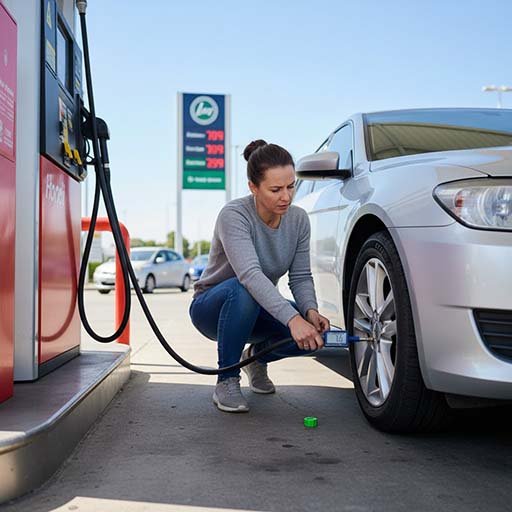
A dedicated fuel efficiency savings planner tab can visualize how adjustments add up over time. By moderating speeds, scheduling tune-ups, and maintaining tire pressure, drivers can see how better fuel efficiency could save them money.
Comparing city vs highway fuel usage within the same vehicle highlights why urban stop-and-go traffic feels so expensive and why even small shifts in routine can save money on gasoline costs.
Comparing Vehicles and Future Purchases
Before signing for a new car, many households now estimate fuel costs before buying a new car. A side-by-side comparison of a gasoline-powered sedan, compact crossover SUV, diesel engine vehicle, hybrid electric vehicle, and plug-in hybrid vehicle often reveals surprising differences in lifetime spending.
Including electric vehicle charging costs and the price of a public transit pass in the same model helps families see whether a partial or full shift away from fuel makes sense for their situation.
Smart Behavior Over Extreme Sacrifice
Long-term success usually comes from smart habits, not drastic deprivation. Combining errands, choosing efficient routes, and using carpool lane programs are simple ways to reduce consumption. In some cities, replacing a handful of short trips with walking, biking, or a public transit pass can free up money for savings or debt payoff.
Dealing With Fuel Inflation and Volatile Prices
Even well-designed plans must live in the real world, where prices move fast. That’s why drivers build variable gas price planning into their systems from the start.
By inserting modest annual increases informed by the Consumer Price Index for gasoline, they can estimate how rising fuel prices will hit their wallet and decide how much buffer to keep. This, combined with official data from the U.S. Energy Information Administration (EIA), gives a realistic view of fuel inflation impact on budget over several years.
Integrating Fuel Planning Into the Overall Budget
Fuel Expense Envelope System
Many people still like the discipline of envelopes. A hybrid approach uses a digital fuel expense envelope system, where a fixed amount is earmarked each month and tracked carefully. Once that envelope is empty, nonessential trips get postponed.
Household Transportation Budget as One Big Picture
To stay balanced, drivers fold all transportation-related costs into a unified household transportation budget. That includes fuel, maintenance, tires, transit passes, parking, and tolls.
When everything is visible in one place, it becomes easier to balance fuel costs with other household bills and avoid “silent” creeping expenses that slowly consume savings goals.
Weekly and Monthly Rhythm
A simple routine is often enough:
- Weekly, drivers track fuel spending by week, month, and year, update the weekly fuel budget tracker, and spot unusual spikes.
- Monthly, they turn driving habits into a monthly fuel plan for the next period, adjust categories, and set a monthly limit for fuel spending and stick to it.
Over time, this rhythm helps them track how changing gas prices affect their budget without constant stress.
FAQs: Gas Budget Planning
1. How can someone calculate their monthly fuel budget if prices keep changing?
A practical approach is to build variable gas price planning directly into the sheet. Drivers pick a conservative high price, a realistic average, and a best-case low price, then track how changing gas prices affect their budget across those three scenarios. Pairing this with real-time fuel price planning tools such as Live U.S. Gas Prices (Updated Weekly) and GasBuddy keeps the inputs current.
2. How much should someone set aside for fuel on a tight income?
To plan a realistic fuel budget on a tight income, most people start with essential trips only and ask, “how much should I set aside for fuel each month to cover work, school, and critical errands?” That baseline becomes the foundation for the budget planner for commuting, with a small buffer added for emergencies.
3. What’s the simplest way to figure out commute fuel costs?
The simplest method is to figure out fuel costs based on a daily commute using distance, expected MPG, and pump prices. A work commute cost estimator can factor in traffic patterns and help compare fuel costs for different routes to work, revealing the true cost of each option.
4. How can someone see whether fuel expenses are too high?
After a few months of tracking, it becomes easier to check if current fuel spending is too high by comparing totals against other priorities. When drivers track fuel spending by week, month, and year, they can see trends clearly and decide whether to adjust routes, vehicles, or habits.
5. How should multi-vehicle or shared-car households budget for fuel?
Households with more than one vehicle can lean on a multi-car fuel expense planner and plan fuel spending when sharing a car. Many families choose to split fuel expenses fairly with roommates or family based on miles driven or income, then document this clearly in their planner.
6. How can someone factor in road trips and weekend travel?
Separate tabs for trips make it easy to calculate fuel costs for weekend trips in advance and quickly estimate fuel costs for any road trip. By doing this ahead of time, drivers know how much of their fuel envelope is left for everyday use.
7. How can loyalty programs and cards reduce fuel costs without overspending?
Used wisely, gas station loyalty programs and fuel rewards credit cards can save money on gasoline costs by shaving a few cents off each gallon. The key is to pay balances in full and treat rewards as a bonus, not an excuse to drive more or spend beyond the plan.
8. How do school runs and kids’ activities fit into a plan?
Parents often start by checking how much fuel money goes on school runs and extracurricular activities, then roll those into a family car fuel budget tool. Once everything is visible, decisions about carpooling, schedules, or a public transit pass for older kids become easier.
9. How can someone budget for fuel when starting a job far away?
Before accepting a role, it’s wise to budget for fuel when starting a new job far away using local prices, commute distance, and expected traffic. Comparing this with current numbers helps estimate how rising fuel prices will hit their wallet and decide whether the opportunity truly makes financial sense.
10. How can someone see how many miles they can drive on their fuel budget?
With the right formulas, a driver can see how many miles they can drive on their fuel budget by dividing the total fuel envelope by the product of price per unit and consumption. This calculation, combined with realistic miles per gallon (MPG) numbers, shows whether planned trips fit within the available budget.
Closing Thoughts
A thoughtful fuel plan doesn’t require fancy software or a finance degree. With a clear budget template for fuel spending, a handful of trustworthy data sources, and a bit of discipline, any driver can turn volatile prices into a calm, predictable monthly plan.
Instead of feeling trapped by pump prices, readers can use tools like a household transportation budget, a fuel expense envelope system, and even a simple student commuter fuel budget or rideshare driver fuel planning sheet to stay in control. From there, mobility becomes a choice, not a constant stress.
Author Bio:
Written by Vauce Cindy, who loves simplifying everyday money and fuel costs. Published by Ahmed Saeed, who curates practical, data-driven guides on budgeting and digital life.